
Japan · Culture
Morning Service and Gruel at Japanese Zen Temples: Meals Within the Daily Rhythm
The day begins before dawn
In the Soto Zen school, everything in daily life, from greetings, cleaning and cooking to eating and washing, is regarded as practice. The official Soto Zen website gives one example of a training monastery’s day. In that example the wake-up bell sounds at 3:30 a.m., washing follows, then morning zazen (gyoten zazen, held before dawn) begins at 3:45, and the morning service (chokaso fugin) follows at 4:30.
The same example puts the morning meal (shoji) at 7:00, work practice (samu, such as cleaning) at 8:00, lunch at 12:00, the evening meal (yakuseki) at 17:00 and lights out at 21:00. The visitor program of Eiheiji, a head temple of the school, likewise shows an overnight stay in which the wake-up bell is at 4:00, the morning service is held in the Hatto (Dharma hall), and a light breakfast, zazen and cleaning follow. It says the morning service is held every day of the year and that its start time changes by day. These are only examples; times and content differ by monastery and season.

The morning service
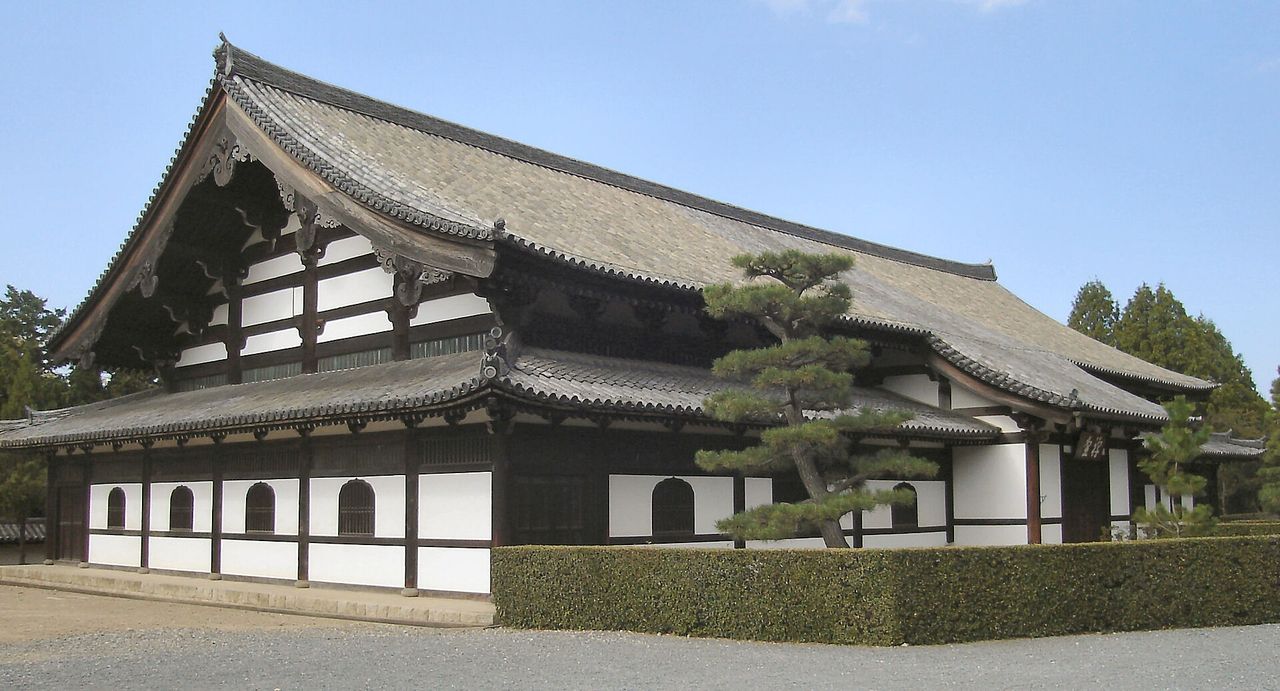
According to the official explanation, the morning service begins with bows to the Buddha and the two founding ancestors, includes prayers for world peace and people’s happiness, and also offers memorial recitation for past masters and ancestors. So before the morning meal, the day opens with zazen and chanting, and the meal is placed as one part of that routine.
Gruel in the morning, rice at midday
The Soto Zen website explains that Fushukuhanpo, the guide to mealtime conduct written by Master Dogen, was composed nearly 800 years ago and is still handed down in monks’ halls. The title’s “shukuhan” (gruel and rice) came to mean meals in general, because gruel is the basic morning dish and rice the midday dish.
In official materials the morning meal at a monastery appears under the name shoji. Some Japanese dictionaries also list shukuza as a word for a Zen temple’s breakfast, but usage is said to vary by temple and school. This article follows the official materials and speaks of the morning meal and morning gruel.
As for what accompanies the gruel, a report on the book Zen to Shoku (Zen and Food) by Soto priest Shunmyo Masuno (published by Serai.jp) says that the morning gruel during training is served with only a little gomashio (sesame salt) and pickles. This comes through a book introduction, so actual practice is thought to vary by monastery and period. The same article says that eating like a monk every day is not realistic for most people, and suggests having rice gruel, cooked from raw rice, for breakfast once or twice a week.
An outline of mealtime etiquette
According to the Soto Zen website, meals are taken in the monks’ hall, where zazen is practiced, with the kesa (monk’s robe) worn. Zazen and the recitation of verses come before the meal. The bowls are called oryoki: a set of lacquered bowls of different sizes that nest together. At mealtime the cloth that wrapped them is spread out and the bowls are set on it. The main points of etiquette are these.
- Saba, the offering of a few grains: before eating, a few grains of rice are set aside from the bowl. This is explained as a reminder against a self-centered mind and a way of giving form to the spirit of sharing. The collected grains are placed on a stone stand outside the hall as an offering to birds, insects and other creatures.
- Taking a fitting amount: each person serves only the amount suited to their own condition, so nothing is said to be left over.
- Cleaning up after the meal: after eating, the bowls are cleansed with tea and hot water and stacked away. For this reason, even when a hundred monks eat at once, no dishes are left to wash, according to the explanation.
- Eating in silence: apart from chanting, the meal is silent and unhurried, with attention on eating. The website says this attitude is the same as in zazen.
The Gokan no ge (Five Contemplations), recited before meals, has five parts: reflecting on the effort and the life that brought the food to you; reflecting on whether your own conduct deserves the meal; guarding the mind against greed and similar delusions; receiving the meal as a good medicine to sustain the body; and receiving it for the sake of completing the path. These express a view of eating as part of practice rather than a way of satisfying desire. The verse is covered in more detail in Tenzo Kyokun and the Gokan no Ge, which also introduces the role of the tenzo, the monastery cook.
Meals as part of the rhythm of the day
Reading the times in that example in order, the morning meal comes after morning zazen and service, lunch after work practice, and the evening meal after the late-afternoon service. The official site explains that yakuseki, the evening meal, derives from the custom of taking dinner as a good medicine to ease hunger. Meals sit inside one continuous routine with zazen, chanting and work, and each has its own name.
What is described here concerns Soto Zen monasteries. Even within Zen, routines and meals differ by school and temple. Also, the meals of monks in training are not the same thing as the breakfast a visitor experiences.

For travelers considering an experience
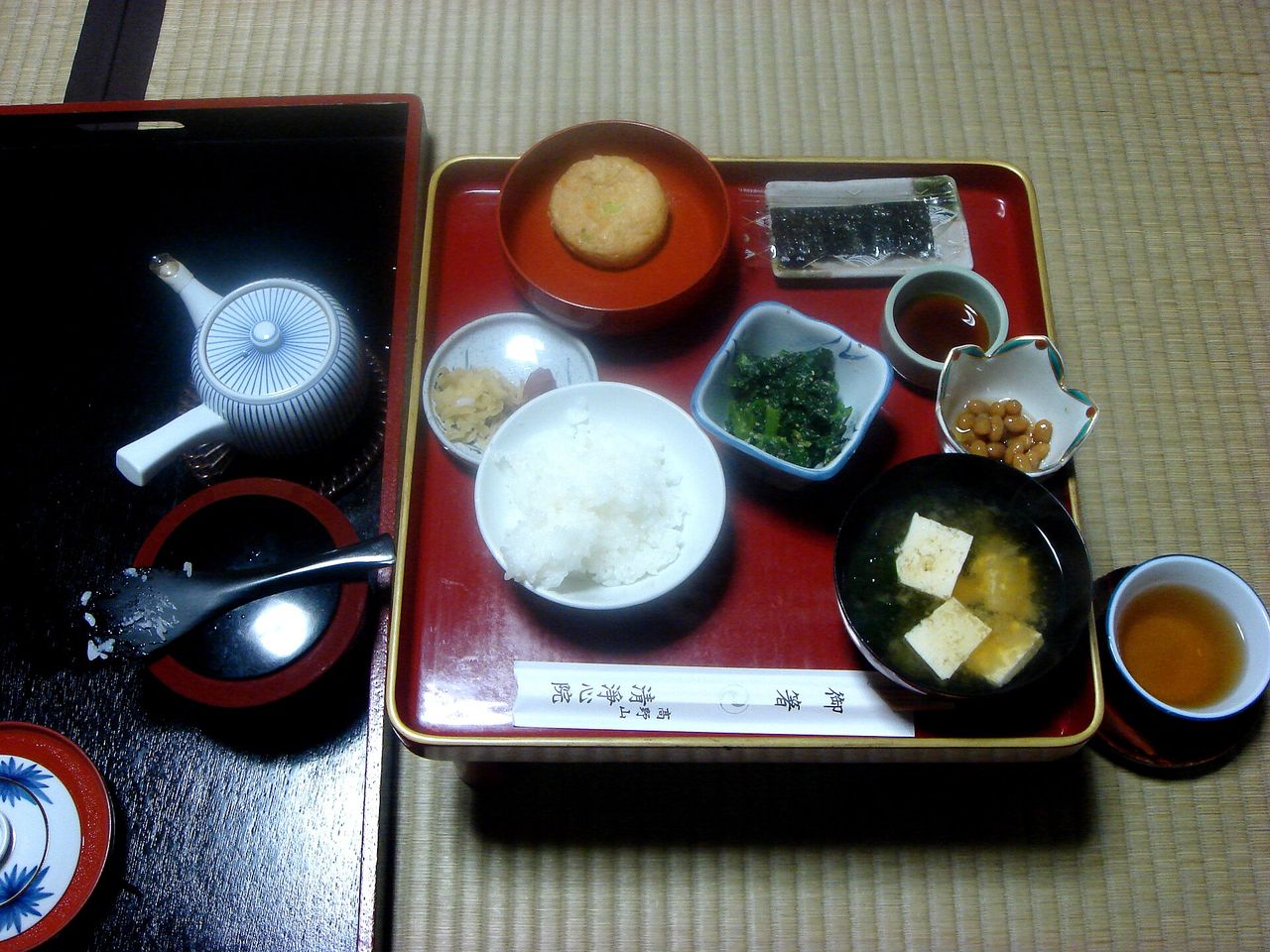
An event notice on the Soto Zen website describes an experience offered inside a hotel in Tokyo that combined zazen, a shojin breakfast centered on morning gruel taken with proper etiquette, and sutra copying. As a guide, zazen took about 60 minutes, the gruel about 30 minutes and sutra copying about 30 minutes, and the notice says the flow may change depending on the day.
At some temples and temple lodgings, visitors can take part in the morning service or breakfast, but content, times and conditions differ by place. Please check directly when booking whether you can take part, what to wear, and matters such as allergies or dairy ingredients. Shojin ryori is also not the same as modern veganism. For an overview of temple lodgings on Koyasan, see Koyasan Shukubo and Shojin Ryori.
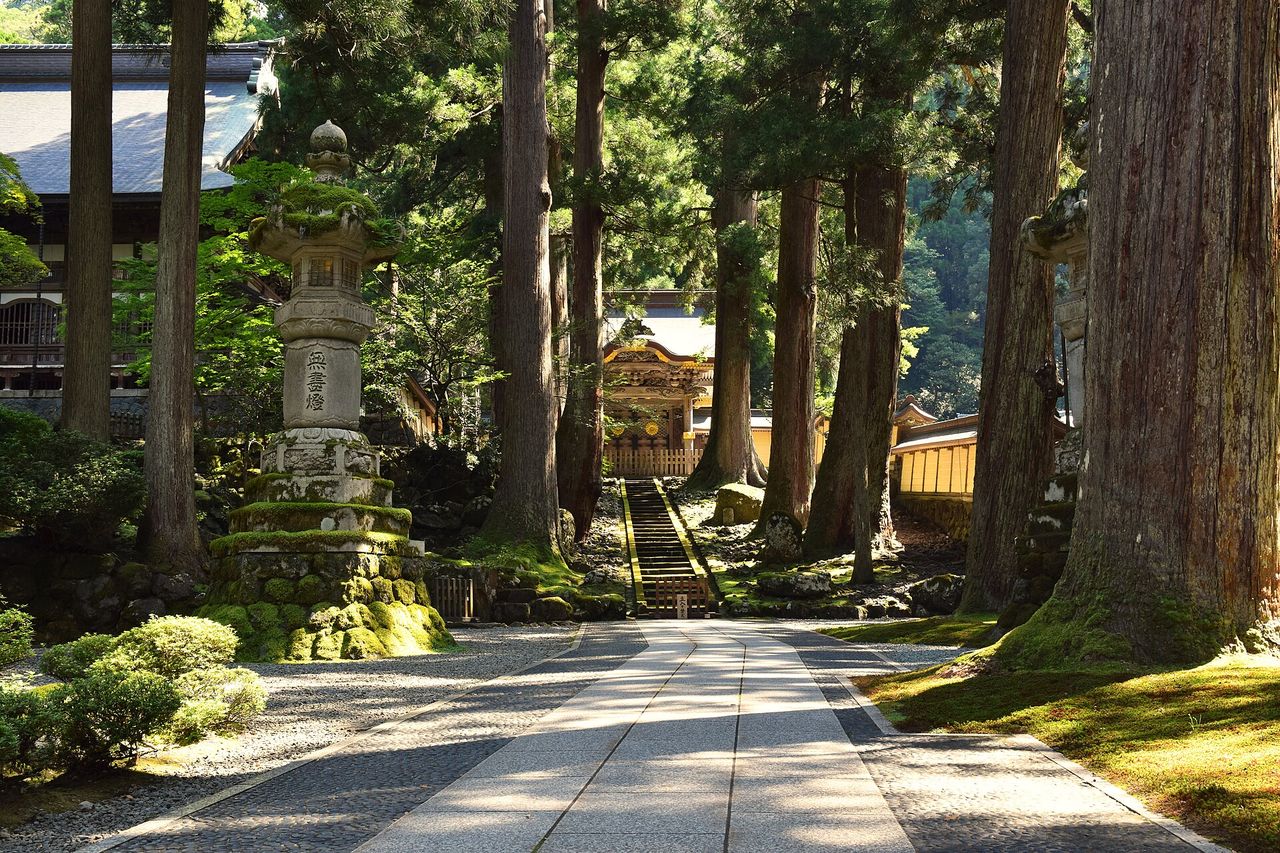
Cover image: Eihei-ji in Fukui Prefecture, one of the two main temples of the Sōtō school of Zen. Photo: 雷太 / CC BY 2.0 / Wikimedia Commons

Sources
- Soto Zen training (Sotozen-net, in Japanese)
- Fushukuhanpo and Zen mealtime etiquette (Sotozen-net, in Japanese)
- Eating as practice (Sotozen-net, in Japanese)
- Learning from the Gokan no ge (Sotozen-net, in Japanese)
- Individual and group Zen training, morning service guide (Eiheiji, in Japanese)
- Why rice gruel belongs at breakfast (Serai.jp, 18 Oct 2025, in Japanese)
- Morning gruel event notice (Sotozen-net events, in Japanese)