
Japan · Travel
Shukubo and Shojin Ryori at Koyasan: What Temple Lodging Involves
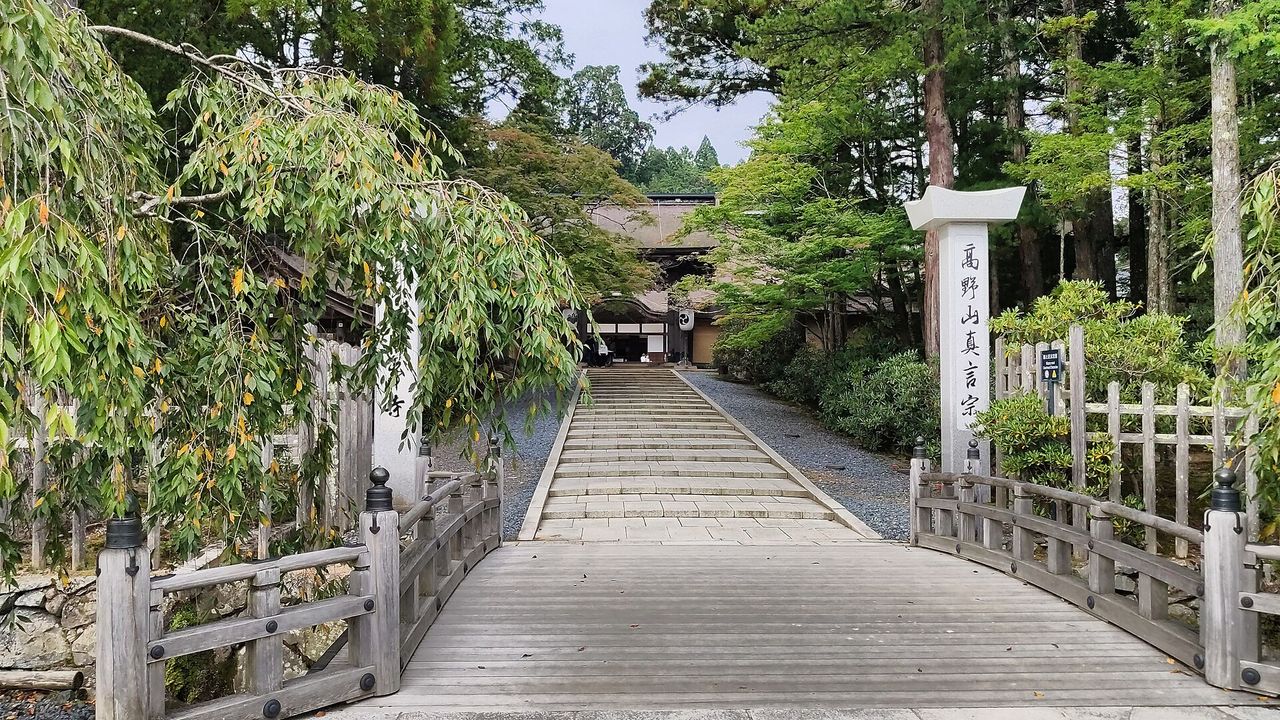
Koyasan and the shukubo
Koyasan is a mountaintop sacred site of Shingon Buddhism in Wakayama Prefecture, said to have been opened by Kobo Daishi (Kukai) in the early Heian period, according to the official site of Kongobuji, the head temple of Koyasan Shingon Buddhism. A shukubo is temple lodging: originally accommodation for monks and pilgrims, it is now open to ordinary travelers too, according to the Wakayama Tourism Federation. For the basic idea, see What is a shukubo?
On the number of lodging temples, the Koyasan Shukubo Association says that of the 117 temples on the mountain, 52 are shukubo temples. The Wakayama Tourism Federation says “more than 50” or “about 50”, and an English page of the Japan National Tourism Organization (JNTO) gives 51, so the count differs by source. None of these pages states a reference year, so the figures here are simply what the pages said when checked in October 2026.
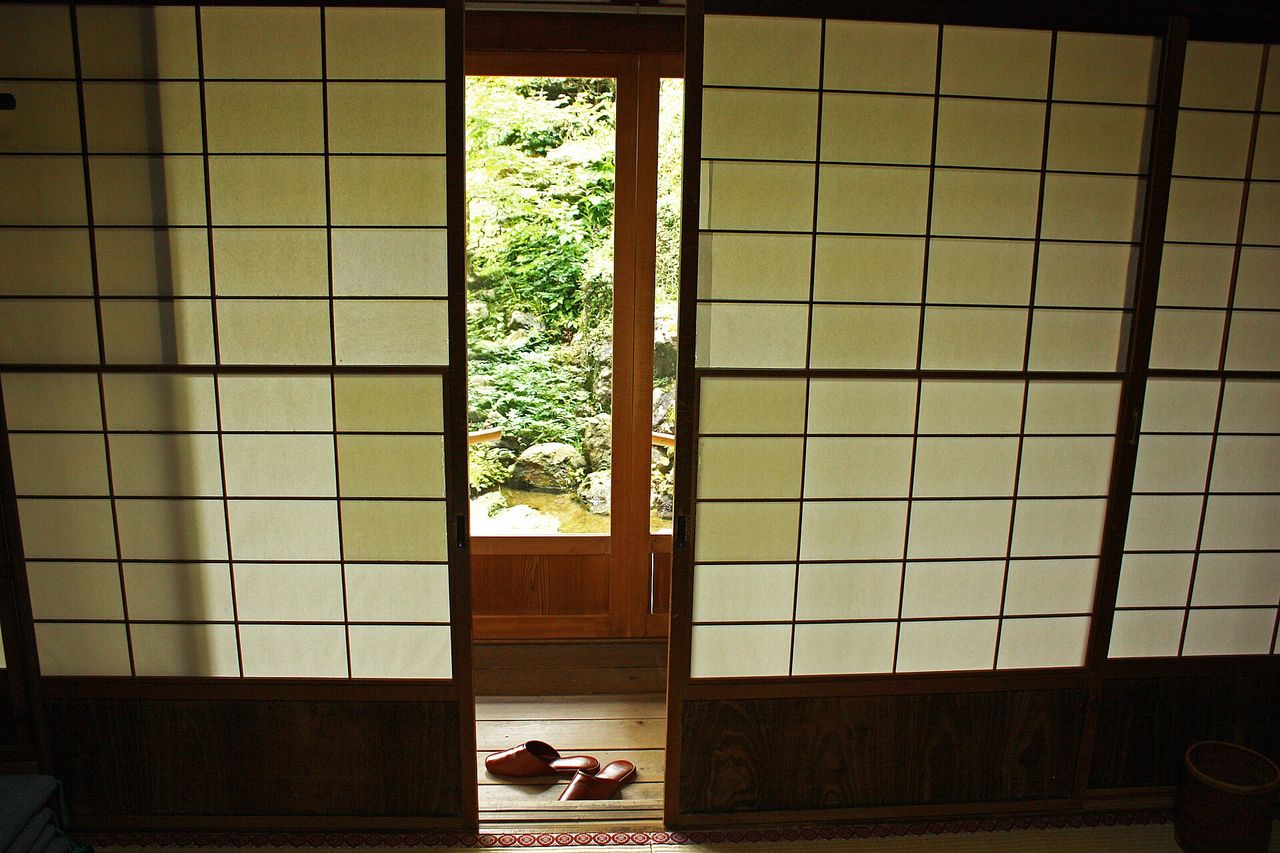

The flow of a stay
A typical stay runs like this: you arrive at the temple in the evening, have dinner, rest, and the next morning may join the dawn service in the main hall (gongyo, or o-tsutome). The Koyasan Shukubo Association encourages guests to attend it. According to the Wakayama Tourism Federation, the service is commonly held from around 6:00 to 6:30 a.m., with monks chanting sutras in the main hall. Taking part is optional and needs no special preparation. The federation describes it as a service in which people express gratitude to the Buddha at the start of the day and hope for peaceful days ahead.
Goma is a fire ritual of esoteric Buddhism. The Wakayama Tourism Federation presents it as a practice in which written wishes on wooden sticks, along with offerings, are entrusted to the flames, the fire being understood as burning away worldly attachments. Whether guests can take part, and when, differs from temple to temple, so please check each temple’s own information before booking.
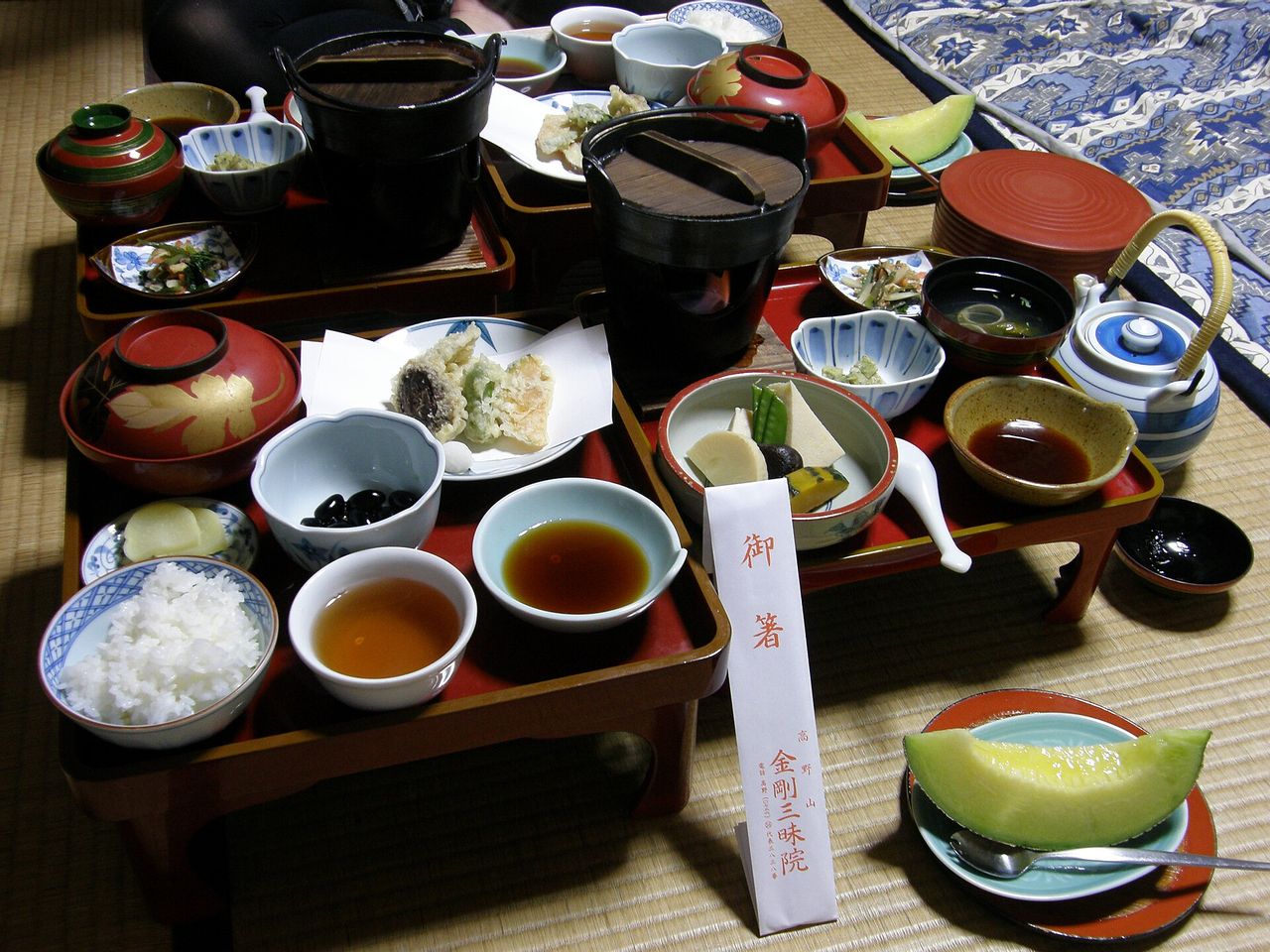

What shukubo shojin ryori is like
According to JNTO, meals at the lodgings are served at dinner and again at the next morning’s breakfast (from a second JNTO page), and are made without meat, fish, green onion, garlic and similar ingredients. The Wakayama Tourism Federation describes the cuisine as built around vegetables with no animal-derived ingredients, following the idea of gomi-goshiki-gohō (five flavors, five colors, five cooking methods), which looks for balance in taste, color and technique. For the cuisine itself, see What is shojin ryori? Shojin ryori is a meal rooted in Buddhist teaching, and its background and purpose differ from those of modern veganism.
Two foods often linked with Koyasan are koya-dofu (freeze-dried tofu, also called kori-dofu) and goma-dofu (sesame tofu). According to nippon.com, koya-dofu is traditionally said to have begun about 800 years ago in the Kamakura period, when tofu prepared at a Koyasan shukubo froze in the night cold and was cooked rather than wasted. Tofu was tied with straw and hung under the eaves in winter, freezing and thawing repeatedly until its moisture was gone, and the name is said to come from Koyasan monks prizing it as a shojin ingredient. The Wakayama Tourism Federation presents sesame tofu as a Koyasan specialty born from shojin cuisine. Other soy-based ingredients are covered in Tofu, yuba and fu in shojin cuisine.
Part of a World Heritage site
Koyasan belongs to the “Sacred Sites and Pilgrimage Routes in the Kii Mountain Range”, inscribed in July 2004 according to the Japanese Agency for Cultural Affairs (Bunka-cho). The property consists of three sacred areas, Yoshino and Omine, the Kumano Sanzan and Koyasan, together with the pilgrimage routes linking them. The 23 components listed on that page include Kongobuji, Jison-in, Niukanshofu Shrine, Niutsuhime Shrine and the Koya pilgrimage route, which lie in and around Koyasan.
General booking information
According to the Koyasan Shukubo Association, the association and Koyasan Sankeiko accept lodging reservations for shukubo temples through an email form. The Wakayama Tourism Federation notes that you can also telephone the association or use its web form, contact a temple directly, or find temples listed on travel booking sites. JNTO advises booking well in advance. Prices, meals and the time of the morning service differ by temple, so please confirm current details through official guidance such as the Koyasan Shukubo Association (shukubo.net).
Cover image: The bridge and stone steps leading to Kongobuji Temple on Mount Koya. Photo: Drivephotographer / CC0 / Wikimedia Commons

Sources
- Staying at a Koyasan shukubo (Koyasan Shukubo Association)
- Guide to staying at a Koyasan shukubo (Wakayama official tourism site)
- Shojin ryori and shukubo experience, a 2-day Koyasan course (Wakayama official tourism site)
- Koyasan (Wakayama official tourism site)
- Sacred Sites and Pilgrimage Routes in the Kii Mountain Range (Bunka Isan Online, Agency for Cultural Affairs)
- Become Part of a Temple (JNTO)
- Koyasan Shukubo (Temple Lodgings) (JNTO)
- Sacred Sites & Pilgrimage Routes in the Kii Mountain Range (JNTO)
- Koya-dofu (nippon.com)
- Koyasan Shingon Buddhism head temple Kongobuji official site