
Japan · Food
The Ingredients Behind Shojin Ryori: Tofu, Yuba, Fu, Konnyaku and Goma-dofu
Why These Ingredients Appear in Shojin Ryori
Shojin ryori developed as the meat-free and fish-free cooking of Buddhist monks (for the big picture, see What Is Shojin Ryori?). The Japan Tourism Agency’s multilingual explanation database lists fresh tofu, fried tofu, fu (wheat gluten), mochi and konnyaku among the typical ingredients, describing them as foods that give dishes texture and body. For Dogen’s teachings on the Zen kitchen, see our article on Tenzo Kyokun. Below we look at tofu, yuba, fu, konnyaku and goma-dofu (sesame tofu), sticking to what the sources let us confirm.
Tofu and Yuba, Made from Soybeans
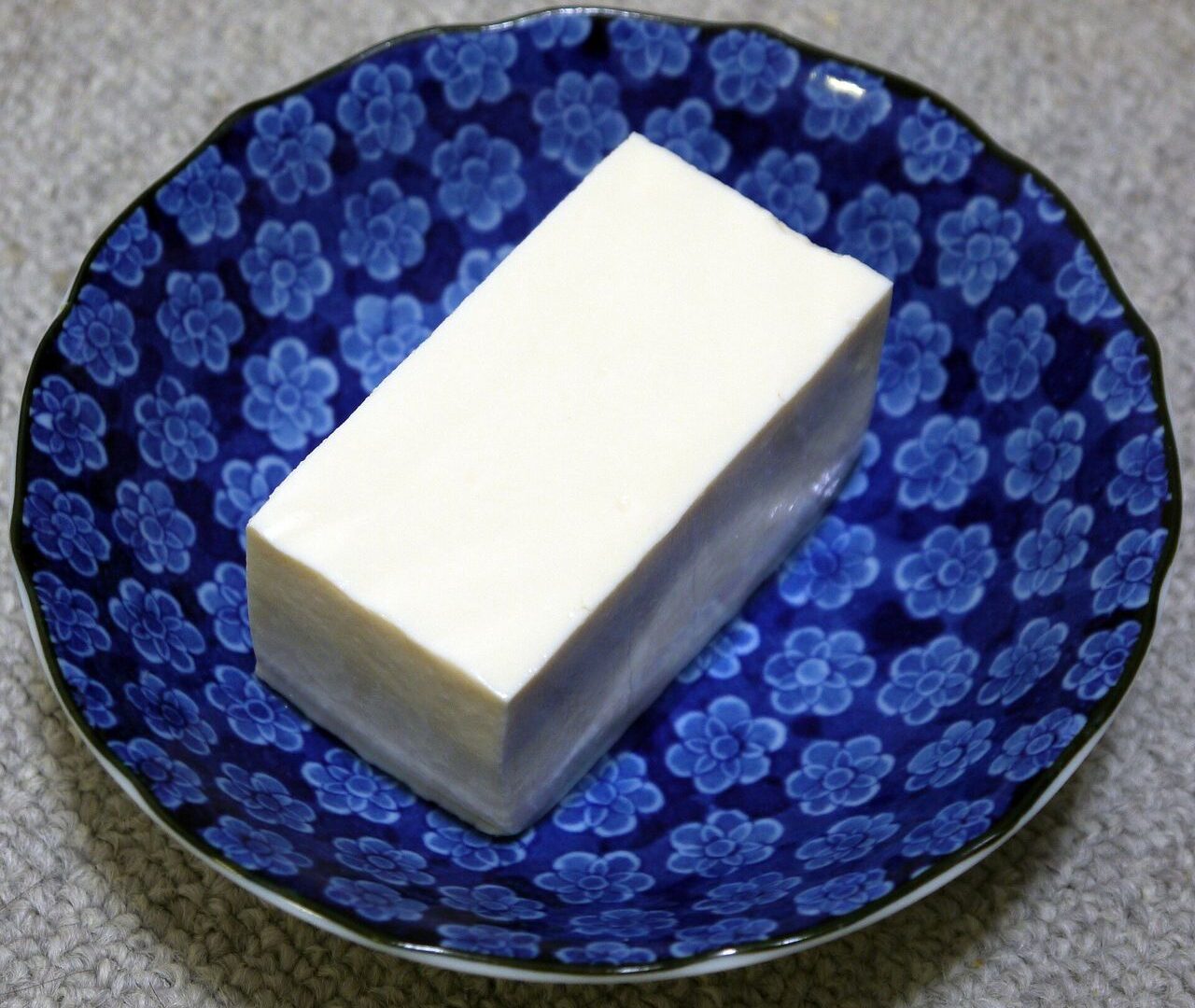
Tofu is made by grinding and heating soybeans, removing the pulp (okara), and setting the resulting soy milk with a coagulant. The Ministry of Agriculture, Forestry and Fisheries (MAFF) says tofu originated in China, came to Japan together with Buddhism, and is presumed to have arrived in the Nara period. At first it was food for the nobility and monks, and it became familiar to ordinary people only in the Edo period. MAFF’s entry on Kyoto tofu explains that in the Kamakura period tofu became an important source of protein for monks who did not eat meat or fish, and the habit of using it in shojin ryori spread. Because tofu is high in water and spoils easily, it was also processed by frying, drying, or freezing and drying, which made it easier to handle and keep. Momen (firm, “cotton”) tofu is broken up and pressed after the first setting, while kinugoshi (silken) tofu is left as it sets, so the two differ in method and texture. Kyoto is blessed with good groundwater, and MAFF notes that yudofu (tofu simmered in hot water) around Nanzen-ji and Gion’s tofu dengaku were well known in the Edo period.
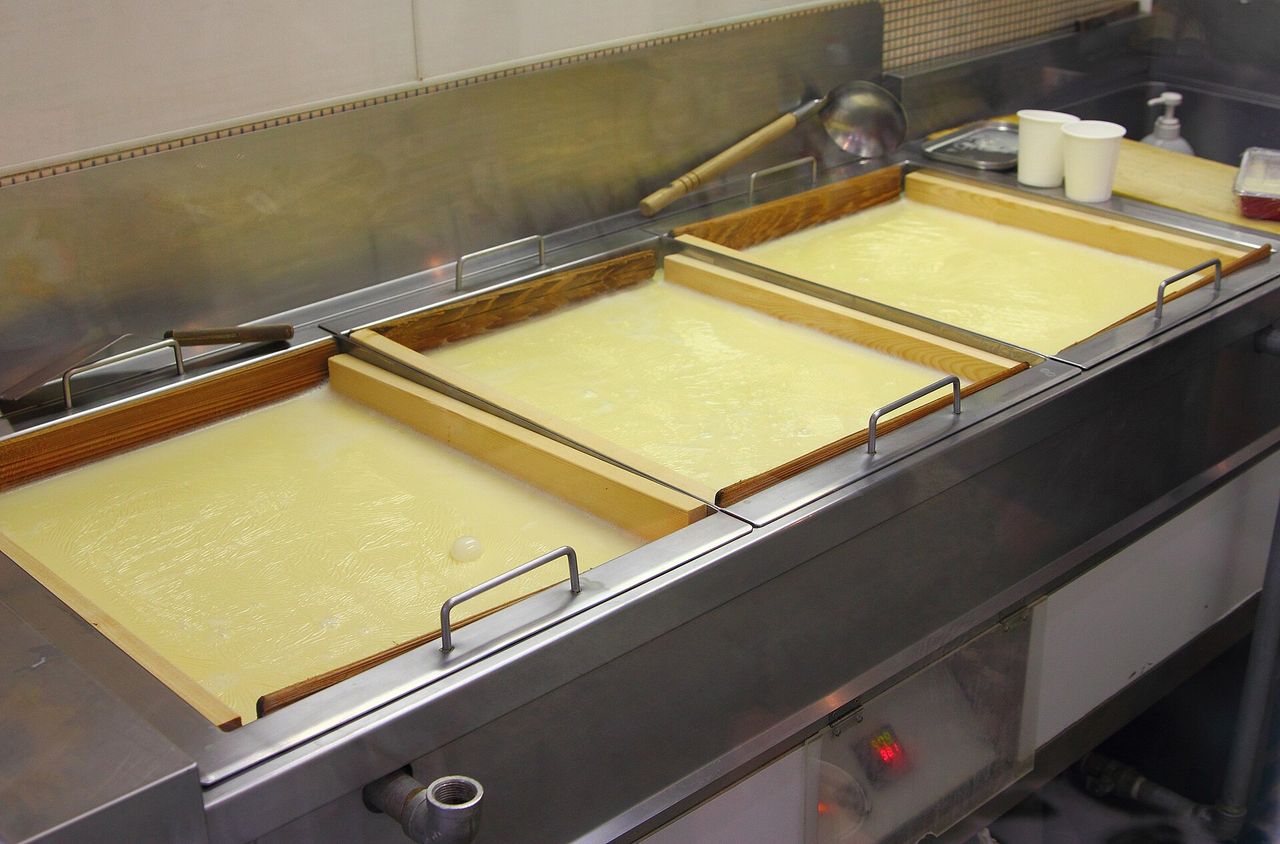
Yuba is the thin film that forms on the surface of gently heated soy milk and is lifted off. It comes as fresh yuba, eaten as it is, and dried yuba, which is rehydrated before use. Encyclopedias state that Zen monks apparently brought the method over in the Kamakura period, that it appears as “tofu no uwamono” in an early Muromachi text, and that it came to be called “uba” and then “yuba” (the etymology has several theories). Kyoto and Nikko are named as the main production areas. Nippon.com explains that yuba was first used in shojin ryori and later became an essential ingredient of kaiseki, the cuisine that grew up alongside the tea ceremony and is central to Kyoto cooking. It also notes that some yuba carries the names of temples such as Toji, Kenninji and Daitokuji.

Fu, Konnyaku and Goma-dofu: From Wheat, Tubers and Sesame
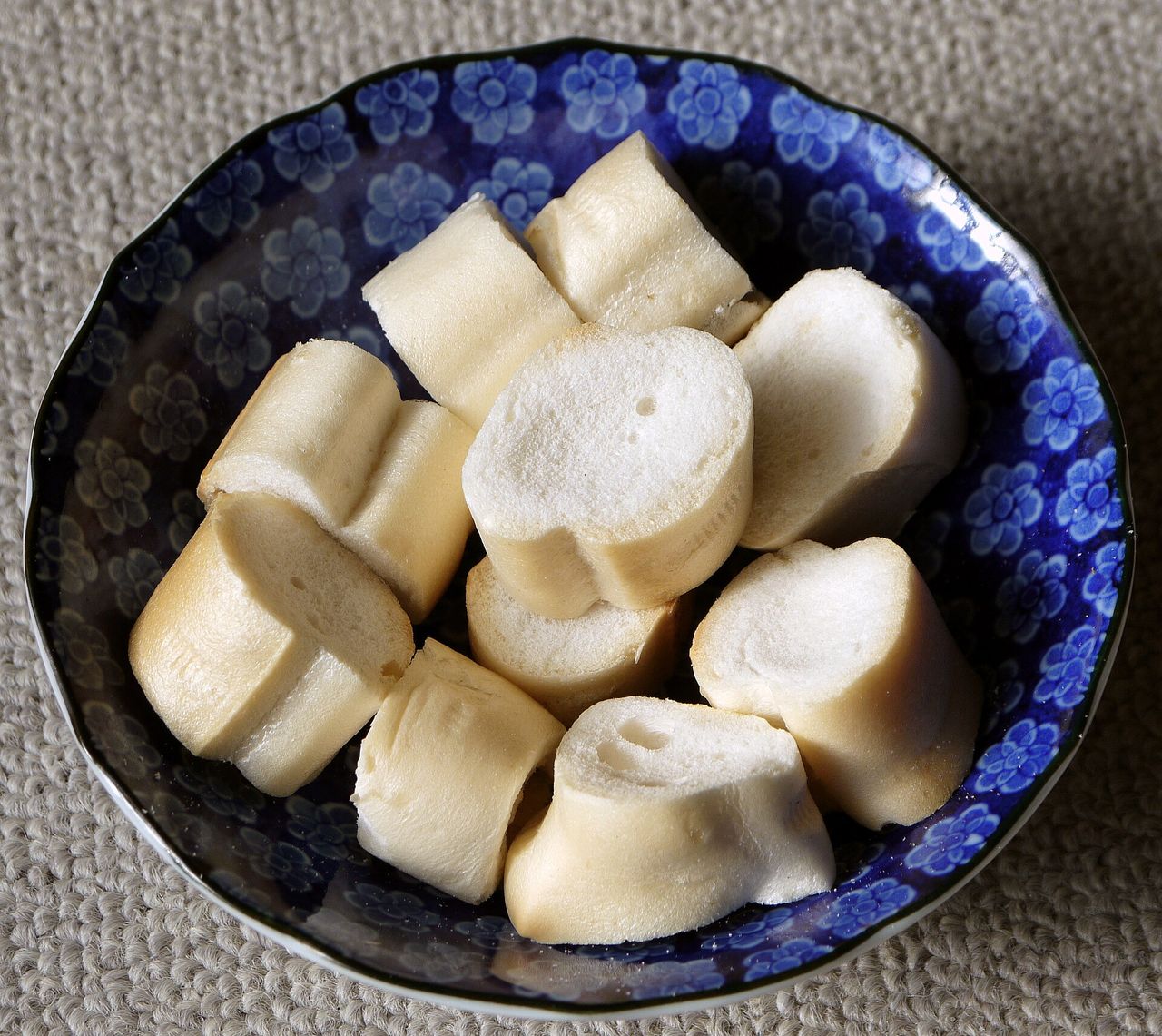
Fu is made by kneading wheat flour with water and washing the dough to extract the protein (gluten). Adding mochi rice flour and steaming it gives chewy nama-fu (fresh fu); adding wheat flour and baking and drying it gives yaki-fu (baked fu), which is rehydrated before use. MAFF says fu is believed to have been brought by a monk returning from China in the Muromachi period, and that a Zen monk introduced it to Kyoto at the end of the Kamakura period. Encyclopedias vary, some saying it was made from the Kamakura period and others that it spread in the early Muromachi period, so the dating is not settled. Wheat production was small then, and fu was eaten only in limited places such as the imperial court and temples; in the Edo period it spread through kaiseki, tea gatherings and memorial meals. Kyoto is described as well suited to fu-making thanks to its abundant groundwater, and Fuyacho Street, said to be named for the fu makers who gathered there, still carries the name today.
Konnyaku is made from the konnyaku tuber: the tuber is turned into powder, mixed with water, and set with an alkaline coagulant such as lime. Its arrival in Japan is explained in different ways. It is thought to have come with Buddhism around the 6th century, although some accounts place it before the Heian period. It was first prized as a medicine and eaten by only a limited number of people. Encyclopedias record that Zen temples in Kamakura served it simmered in miso, that it spread as a shojin ryori ingredient in the Muromachi period, and that it reached ordinary tables in the Edo period.
Goma-dofu has tofu in its name but contains no soybeans. Ground sesame and kudzu starch are mixed with water, cooked, and cooled until set. MAFF’s regional cuisine page says it is said to have been born about 1,200 years ago as a shojin dish for monks training on Koyasan, and that Kukai is said to have brought sesame back from Tang China and begun growing it in Japan. Some see its ancestor in the “asa-dofu” of the 1697 Wakan Shojin Ryori-sho, and it became known nationwide as a Koyasan souvenir in the Showa era.

A Traveler’s Guide to Comparing Them
For these ingredients, differences in raw material and method show up directly in taste and texture. When you compare them, these points make the differences easier to notice.
- Tofu: the texture of momen versus kinugoshi, set in different ways, and the finish shaped by Kyoto’s water.
- Yuba: the mouthfeel of freshly lifted fresh yuba versus rehydrated dried yuba.
- Fu: the chewiness of nama-fu, and yaki-fu, which has no flavor of its own and is usually cooked so that it takes on flavor.
- Konnyaku and goma-dofu: the bite of konnyaku, and the smoothness and sesame aroma of goma-dofu.
The raw materials are all plant-based: soybeans for tofu and yuba, wheat for fu, the konnyaku tuber for konnyaku, and sesame with kudzu for goma-dofu. Shojin ryori, however, is a cuisine with a religious background and is not the same thing as modern veganism (see Shojin Ryori vs. Vegan). If you need to avoid wheat or soy, it is wise to check the ingredients beforehand.
Cover image: A block of Japanese silken (kinugoshi) tofu in a bowl. Photo: DryPot / CC BY-SA 3.0 / Wikimedia Commons

Sources
- Kyo-dofu (Kyoto tofu) – Nippon Traditional Foods Guide, MAFF
- Processed Bean Products – Nippon Traditional Foods Guide, MAFF
- Kyo-yuba (Kyoto yuba) – Nippon Traditional Foods Guide, MAFF
- Kyo-fu (Kyoto fu) – Nippon Traditional Foods Guide, MAFF
- Konnyaku – Nippon Traditional Foods Guide, MAFF
- Goma-dofu, Wakayama – Our Regional Dishes, MAFF
- Buddhist Vegetarian Cuisine (Shojin Ryori) – Japan Tourism Agency Multilingual Explanation Database
- The Bounty of the Bean, Fresh or Dried – nippon.com
- Konnyaku – nippon.com (Japanese)
- Yuba – Kotobank (Japanese encyclopedias)
- Fu – Kotobank (Japanese encyclopedias)
- Konnyaku – Kotobank (Japanese encyclopedias)