
Thailand · Culture
Phuket Vegetarian Festival (กินเจ): Nine Days for the Nine Emperor Gods and How to Visit Respectfully
Nine days honouring the Nine Emperor Gods
Every autumn, the island of Phuket in southern Thailand holds a vegetarian festival known as เทศกาลกินเจ (thetsakan kin je). It honours the Nine Emperor Gods of Taoism, and according to the Tourism Authority of Thailand (TAT) newsroom, it reflects the beliefs of Phuket’s Hokkien Thai-Chinese community. The same article notes that Thailand’s Department of Cultural Promotion listed the festival as intangible cultural heritage in 2018.
The festival runs for nine days, from the first to the ninth day of the ninth lunar month, so the Gregorian dates change every year. According to TAT, the 2026 festival runs from October 10 to 18. Some guides add that the opening pole-raising ceremony (Go Teng) takes place on the evening of October 9.
How is the origin told?
The best-known story says that around 1825 a travelling Chinese opera troupe came to entertain Chinese migrants working in the tin mines. Its members fell ill, reportedly with malaria, then kept a strict vegetarian diet and prayed to the Nine Emperor Gods, and they recovered. The islanders are said to have started a festival of thanks, and some accounts place the troupe in the Kathu district. The year and the details differ from source to source, so it is best read as tradition rather than established history.
There is another view. A 2006 master’s thesis from Chulalongkorn University argues that Chinese immigrants who came to work in the tin mines brought the custom with them. According to the thesis, after the 1855 Bowring Treaty it was observed mainly by Chinese laborers and only later spread to local residents.

White clothing, yellow-toned flags and the food rules
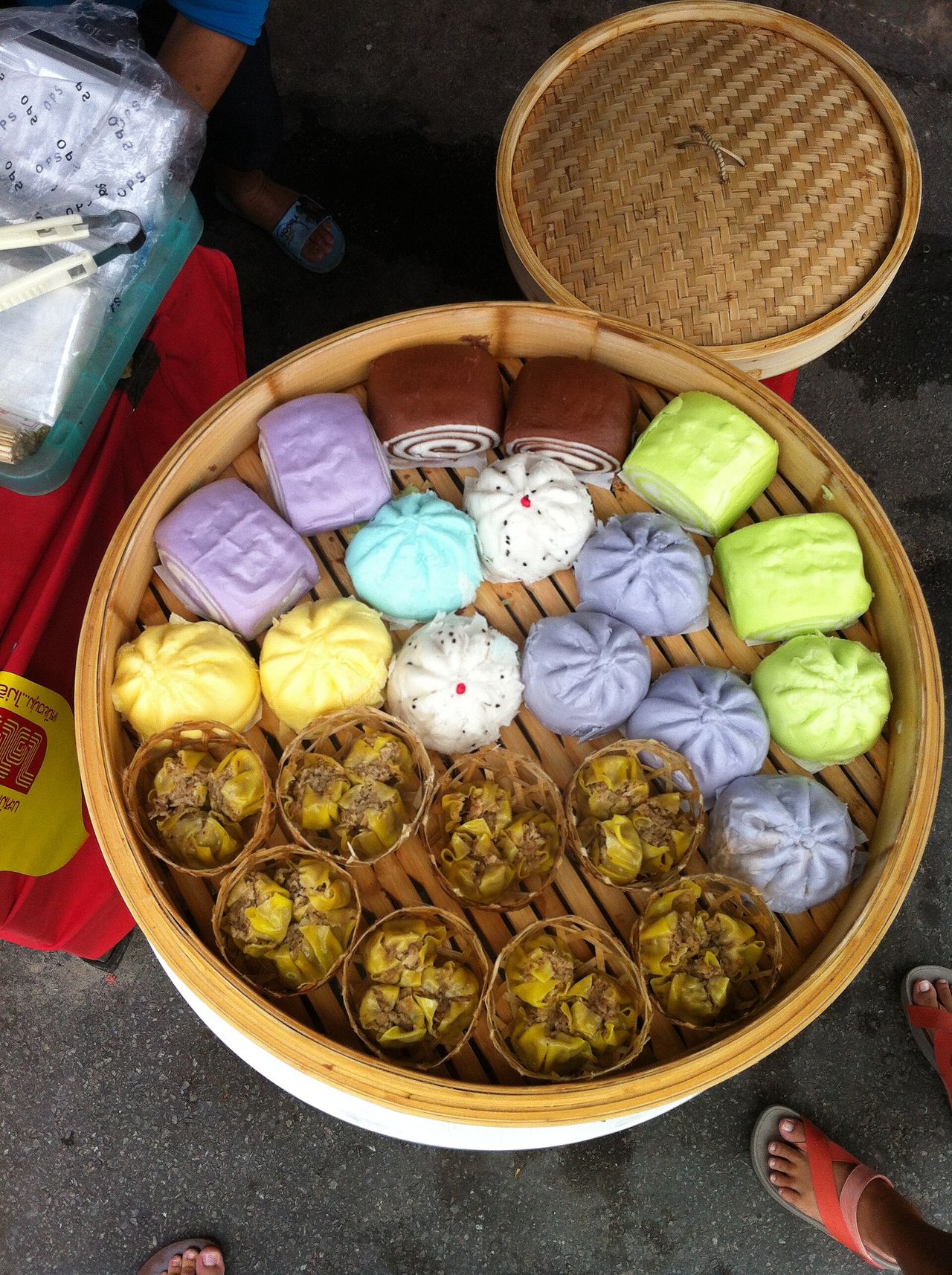
During the festival, participants follow a meat-free diet called กินเจ (kin je). According to TAT, they avoid meat, poultry, seafood and dairy, as well as pungent vegetables such as garlic and onion. Some explanations also say eggs and fish sauce are left out. Stalls offer imitation dishes made from tofu, soy protein, taro and mushrooms.
Those who observe the rules strictly dress in white, which is said to symbolise purity. Shops and stalls fly flags in red and yellow marked with the Thai character เจ (je) to show that they serve festival food.
This is a religious discipline kept as a vow during the festival, and its background and purpose differ from modern veganism. For the distinction, see Shojin Ryori and Vegan: What Is the Difference?. It is also interesting to compare it with other regional traditions such as Vietnam’s com chay.
Mediums and the closing rites
At the heart of the festival are the ม้าทรง (ma song), mediums believed to be possessed by the gods. TAT’s article describes rituals in which they pierce their cheeks with a trident, walk over hot coals and climb ladders of blades. Among devotees, these acts are said to take on the misfortunes of others. Processions carrying statues of the gods pass through the streets, accompanied by drums and firecrackers. According to TAT, on the final day, October 18, the Jade Emperor is sent back to heaven and the Nine Emperor Gods are then seen off toward the sea at Saphan Hin.

Visiting with respect
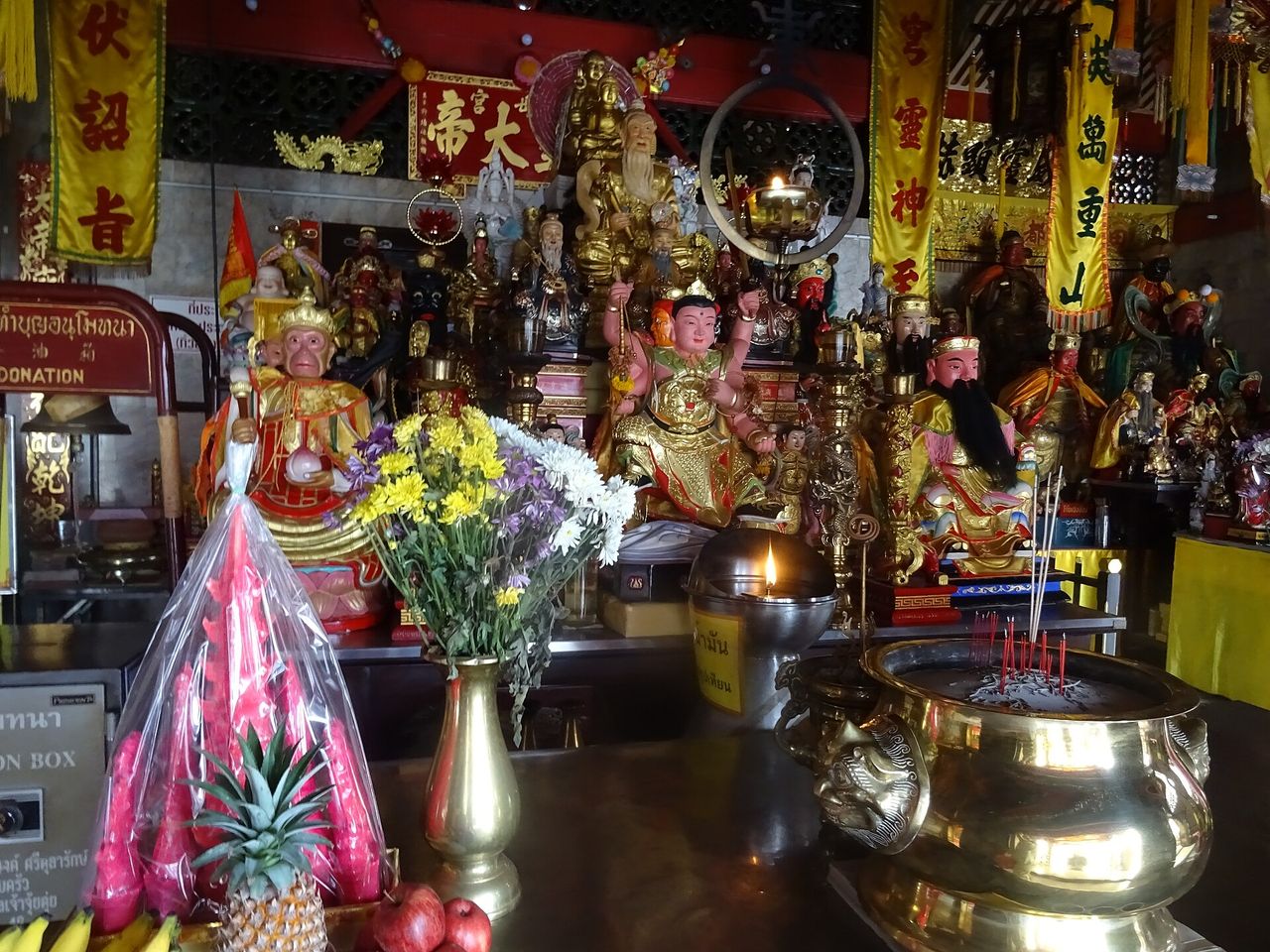
Because this is a religious observance, spectators should behave accordingly. The main points suggested in the sources are:
- Do not stand in front of a palanquin for a photo, and do not touch the mediums or ritual objects.
- Step aside for anyone kneeling in prayer.
- Keep your distance when firecrackers are lit, and protect your eyes and ears.
- Avoid drinking alcohol in the old town or near shrines.
- If you join in, choose white clothing and avoid revealing outfits.
Visitors are reportedly not required to follow the vegetarian rules, but eating at shops with the yellow-toned flags is one way to show respect. Some articles also mention a custom that people in mourning or pregnant women stay away. Schedules and procession times differ by shrine, so check current information before you go. For a wider view of temple food across Asia, see Asia Shojin Journey.
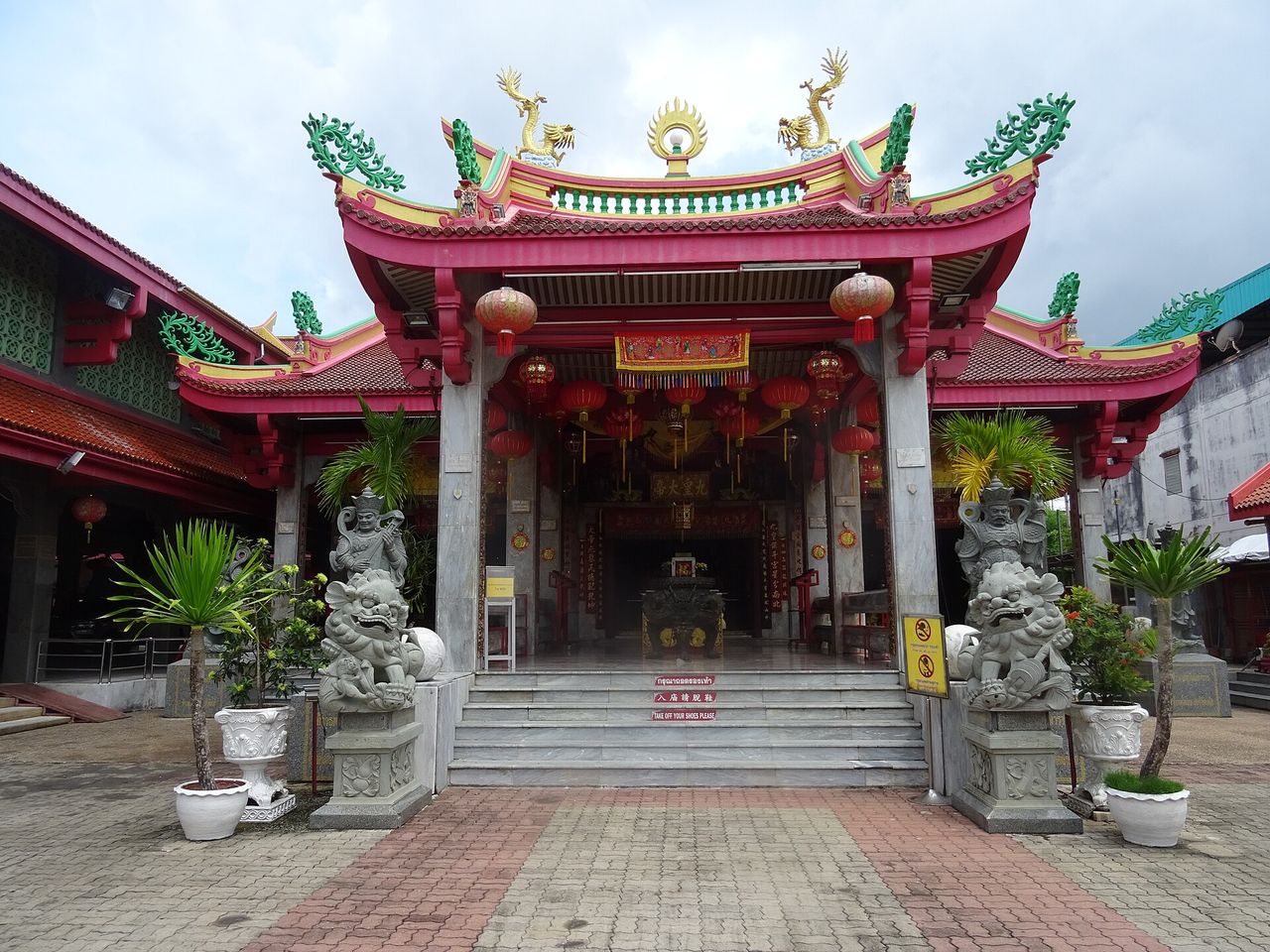
Cover image: Jui Tui Shrine in Phuket Town. Photo: Christophe95 / CC BY-SA 4.0 / Wikimedia Commons

Sources
- TAT Newsroom: TAT highlights Phuket Vegetarian Festival 2026 as a distinctive cultural experience
- TAT Newsroom: Thailand’s Vegetarian Festival: A feast for the spirit and the senses
- TAT Newsroom: Chinese Thainess celebrated across Phuket during the annual Vegetarian Festival
- Chulalongkorn University: The origin and development of the Phuket vegetarian festival (2006)
- Outlook Traveller: Everything You Need To Know About The Phuket Vegetarian Festival
- Thailand Highlights: Phuket Vegetarian Festival 2026
- Phuket Ferry: Phuket Vegetarian Festival 2026
- Villa Phuket magazine: Phuket Vegetarian Festival
- Phuket 101: Phuket Vegetarian Festival