
Nepal · Food
Dal Bhat and Vegetarian Eating in Nepal: Lentil Soup, Rice, Sides, and Food in Festival Life
What dal bhat is
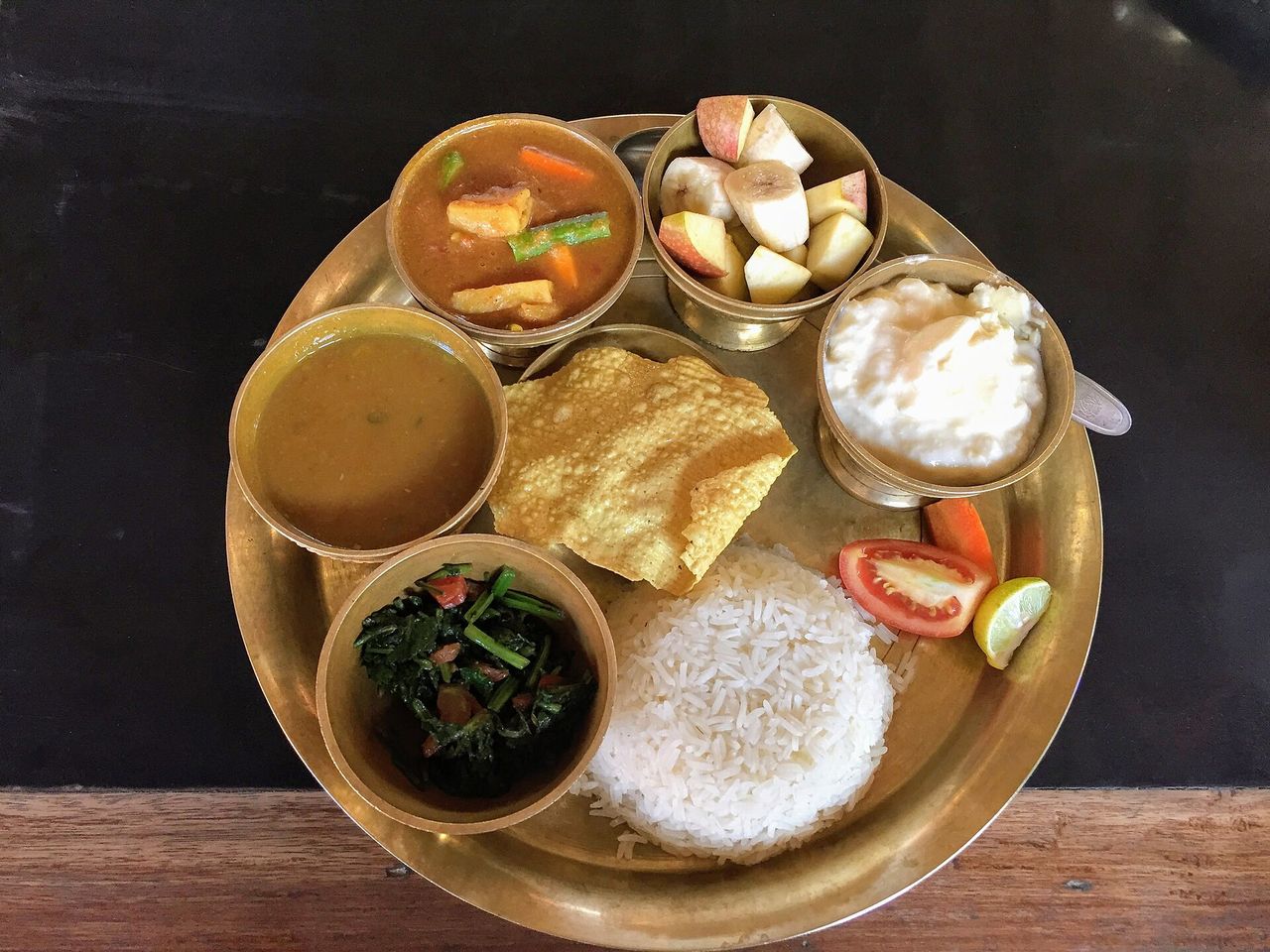
Dal bhat is Nepal’s best-known everyday meal, built around dal (lentil soup), bhat (rice) and tarkari (vegetable curry). The Nepal Tourism Board (NTB) describes it as dal, rice, vegetables and achar (pickle or relish), served with yogurt or buttermilk. The lentils used in the dal are said to vary with the season: black, red, yellow, green or mixed. Each item is described as flavored with its own spices or herbs.
NTB’s culture page likewise says that dal, bhat and tarkari, often with achar, make up the regular meal. Served together on one plate or tray, this format is the basic shape of the Nepali table.
Dal bhat is not always vegetarian
The key point is that dal bhat is not automatically a vegetarian set meal. NTB’s description lists a chicken or mutton curry following the vegetables as part of the standard set. At the same time, its culture page says that meat curry is popular but is often kept for special occasions. Whether meat comes with the meal therefore depends on the household, the restaurant and the occasion.
The travel outlet VegNews notes that, although many Nepalis eat meat, vegetarianism is familiar there, shaped by the large Hindu population and by influences from India and Tibet. For religion, the National Statistics Office’s 2021 census results were reported as roughly 81.19% Hindu, in the 8% range Buddhist, 5.09% Muslim, 3.17% Kirat and 1.76% Christian. Because food customs differ by religion, ethnic group and region, Nepalis cannot be described as either “vegetarian” or “meat-eating” as a whole.

Watch for dairy
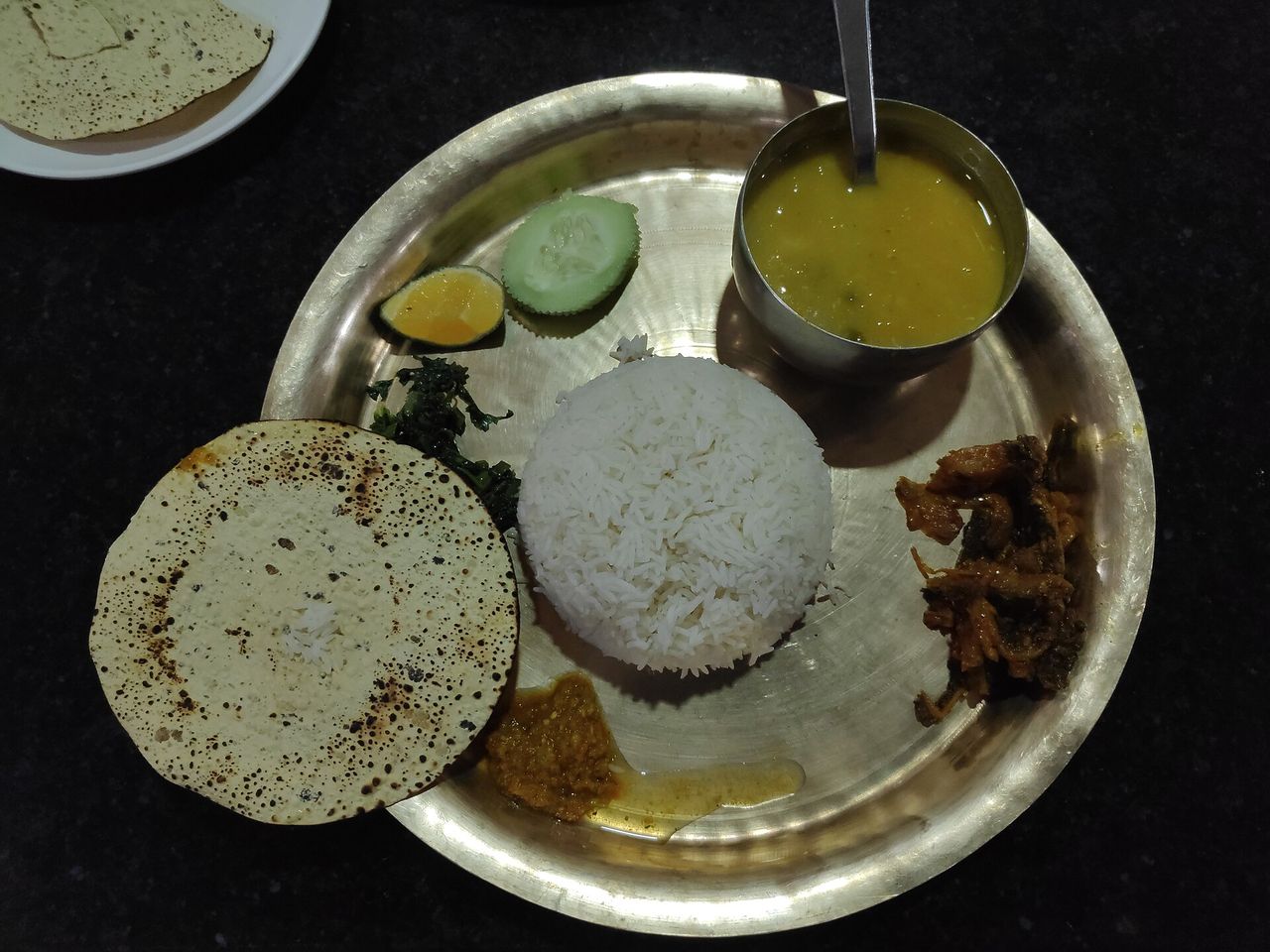
Dishes considered vegetarian in Nepal can contain dairy. The yogurt or buttermilk served with dal bhat is, as NTB’s description shows, part of the meal. VegNews says dal bhat is often free of animal products, but it also warns that ghee (clarified butter), curd (a kind of yogurt) and milk are used in cooking. Tea can include milk or butter and plenty of sugar, so the same article suggests asking for it black if you want to avoid dairy.
How much ghee goes into which dish varies by place and household, and there is no official statistic or standard for it. This article does not judge whether eating dairy is good or bad; it sets out information so you can check it against your own standards. If you want a dairy-free meal, remember that what a local person means by “vegetarian” may not match your own definition.
Festivals and food in Hindu and Buddhist life
NTB explains that festivals are held throughout the year in Nepal and that food plays an important role in them. It also describes Hindus and Buddhists as having co-existed for centuries, with the Buddha widely revered by both.
- Dashain: according to NTB, the longest Hindu festival in Nepal, lasting about two weeks. Prayers to the goddess Durga are central, and family members receive a red tika mixed with yogurt and rice from their elders. NTB says that a large number of animals are officially sacrificed at Hanuman Dhoka on Nawami, and that the festival brings grand feasts.
- Tihar: a five-day festival of lights. There are days to honor crows, dogs, cows and oxen, worship of the goddess Laxmi, the sibling ritual of Bhai Tika, and a closing feast. NTB also notes that slaughtering cows is illegal in Nepal and that respect for cows reflects ahimsa (non-violence), a value shared by Hinduism, Buddhism and Jainism.
- Teej: a festival for Hindu women. The Kathmandu Post reports a feast called dar the day before, then a fast on the day itself and prayers to Lord Shiva.
- Buddha Jayanti: the full-moon day of April or May, marking the Buddha’s birth, enlightenment and death. Many devotees visit Lumbini, the Buddha’s birthplace, and light butter lamps. NTB’s page says nothing about food, so this article does not state any dietary rule for the day.
Newar cooking (the Newars are an ethnic community of the Kathmandu Valley) offers more festival examples. On Yomari Punhi (listed by NTB as 4 December), people make yomari, a steamed dumpling with a shell of new-harvest rice flour and a filling of chaku (molasses) or khuwa (condensed milk) with sesame, and pray to Annapurna, the goddess of crops and food. Kwati, eaten around Janai Purnima, is a soup of nine kinds of sprouted beans; folk belief holds that it protects against seasonal illness and insects. These are traditional sayings, not evidence of any nutritional or health effect.

Practical notes for travelers
- Even if a menu says “veg,” check whether ghee, paneer (cheese), yogurt or milk is used. The same applies to lodge meals, trekking teahouses and markets.
- When ordering dal bhat, say whether you want the meat curry or not, and whether you want yogurt or buttermilk.
- Momos come, according to NTB, with fillings such as chicken, mutton, buffalo, paneer, cheese or vegetables, so specify the filling.
- Tea often contains milk; ask for black tea if you want to avoid dairy (VegNews).
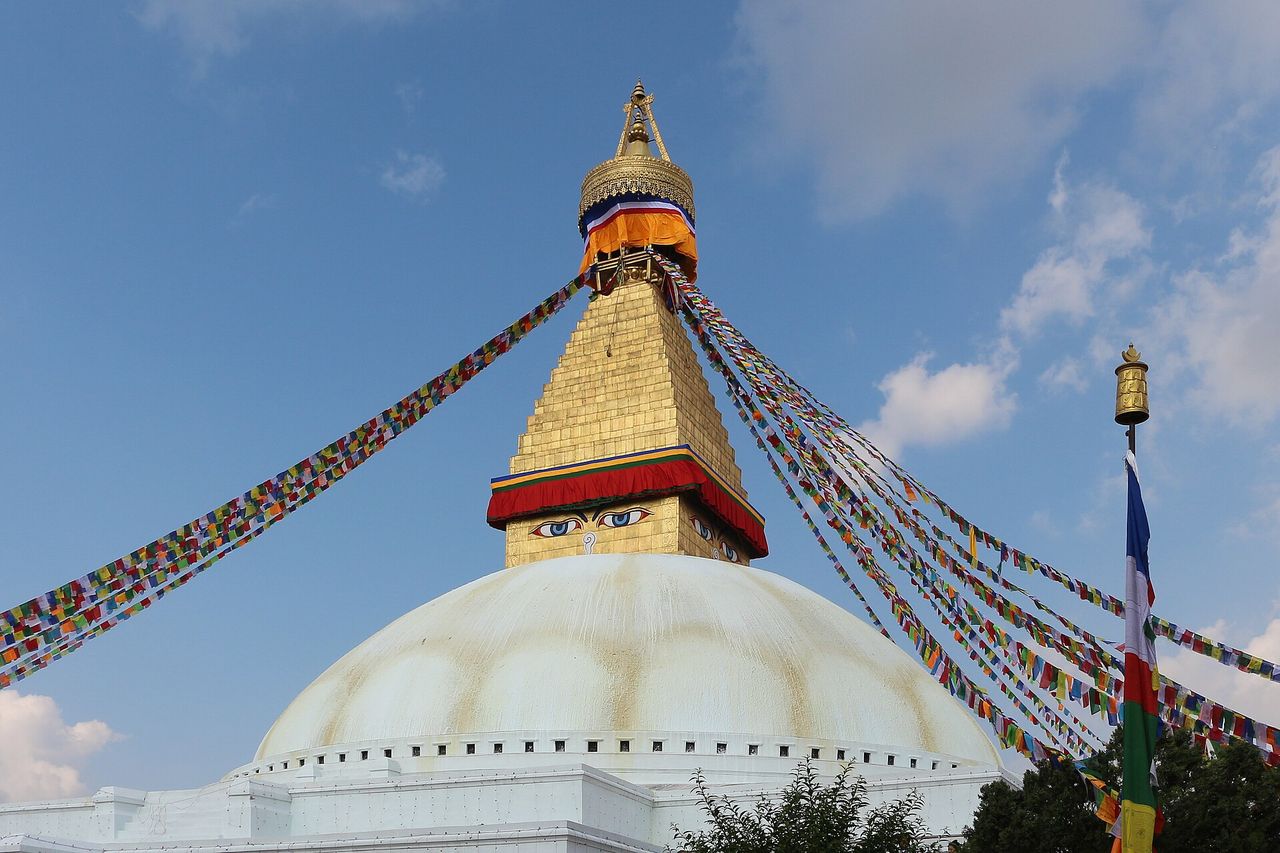
- You may be asked to remove your shoes at temples, and some temples do not admit non-Hindus. NTB also says the right hand is considered pure and is used for eating, giving and receiving.
These are general guides based on published information. Actual dishes vary by restaurant, household and region, so ask on the spot when in doubt. Nepali food customs should also not be placed in the same frame as modern veganism; they have been shaped within religion and daily life in each place.
Cover image: A Nepali meal of rice, lentil soup and vegetable side dishes on one plate. Photo: Subhashish Panigrahi / CC BY-SA 4.0 / Wikimedia Commons

Sources
- Food and Culinary (Nepal Tourism Board)
- Culture of Nepal (Nepal Tourism Board)
- Tihar (Nepal Tourism Board)
- Dashain (Nepal Tourism Board)
- Buddha Jayanti (Nepal Tourism Board)
- Yomari Punhi (Nepal Tourism Board)
- A Vegan Guide to Nepal (VegNews)
- Teej festival being observed across the country (The Kathmandu Post)
- National population census religion (Onlinekhabar English)
- Tale of Kwati Purnima (Ask Me About Nepal)