
Malaysia · Food
Vegetarian Food in Malaysia: Chinese Customs, Penang’s Nine Emperor Gods Period and Halal Labels
Malaysia is a multi-ethnic country where Chinese, Malay, Indian and other communities live side by side, and food customs differ by religion and community. For that reason, the word “vegetarian” can mean quite different things depending on the context. This article focuses on Penang and Kuala Lumpur and sticks to what published sources confirm.
Vegetarian days on the 1st and 15th of the lunar month
Many Chinese Buddhists are said to eat vegetarian on the 1st and 15th of the lunar month. The owner of a free vegetarian eatery in Johor Baru told The Star (May 2025) that the restaurant opens on those two days because they are when “many Buddhists observe vegetarian practices.” According to Free Malaysia Today (July 2023), a temple canteen near KLCC in Kuala Lumpur opens at 11:00 a.m. on weekdays but at 7:30 a.m. on the 1st and 15th of the lunar month. How closely people follow the custom probably varies from person to person, and opening hours can change, so it is worth checking before you go.
The Nine Emperor Gods vegetarian period (Kew Ong Yeah)
In Penang, the most visible occasion is the Nine Emperor Gods festival (Kew Ong Yeah), a Taoist observance. The Star (2025) describes it as dedicated to the nine sons of Tou Mu, the Goddess of the North Star, and says devotees follow a vegetarian diet to purify body and mind, avoiding meat and what is regarded as impure. The same paper reported in 2017 that a nine-day vegetarian diet began on 20 October that year.
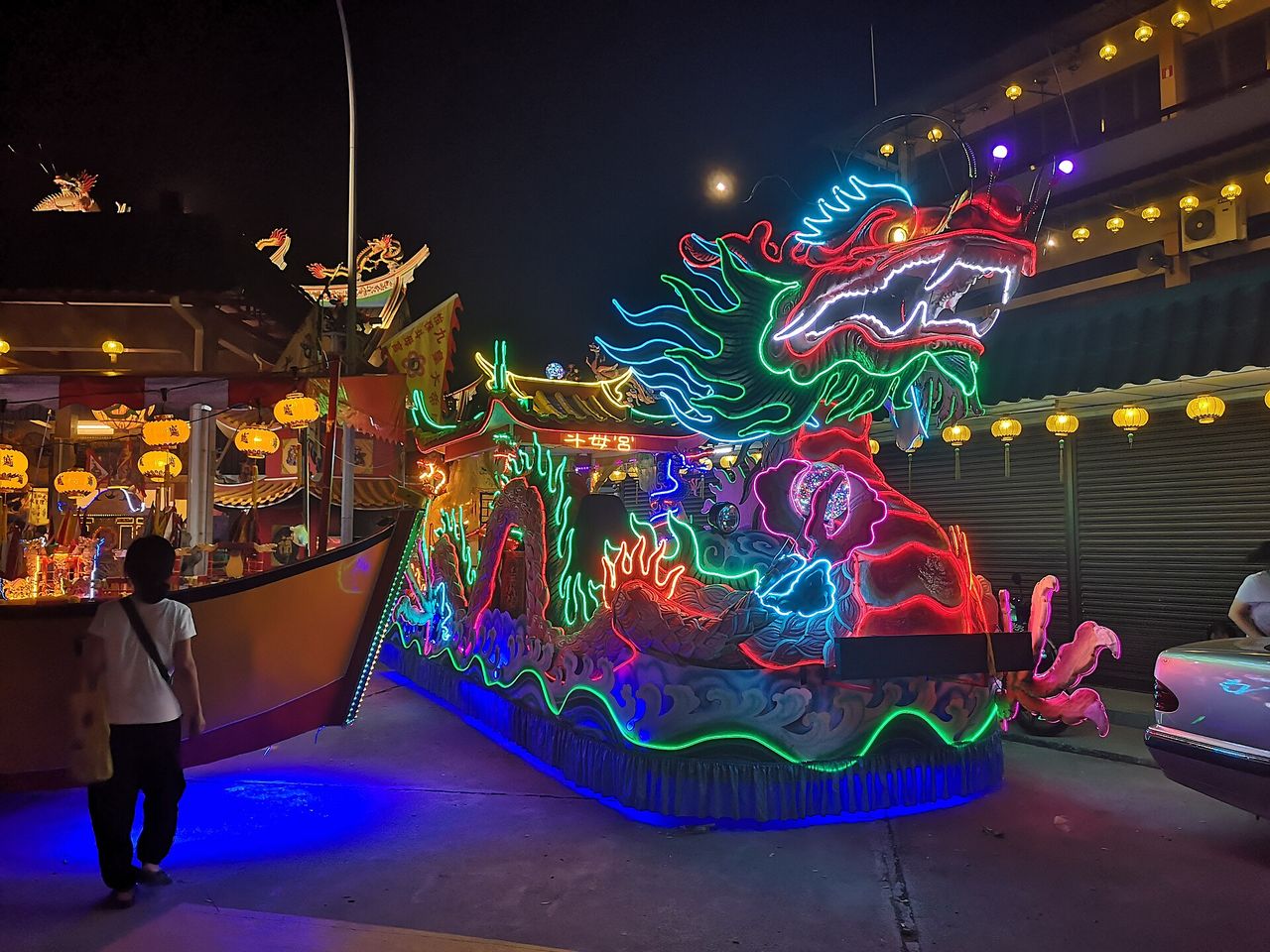
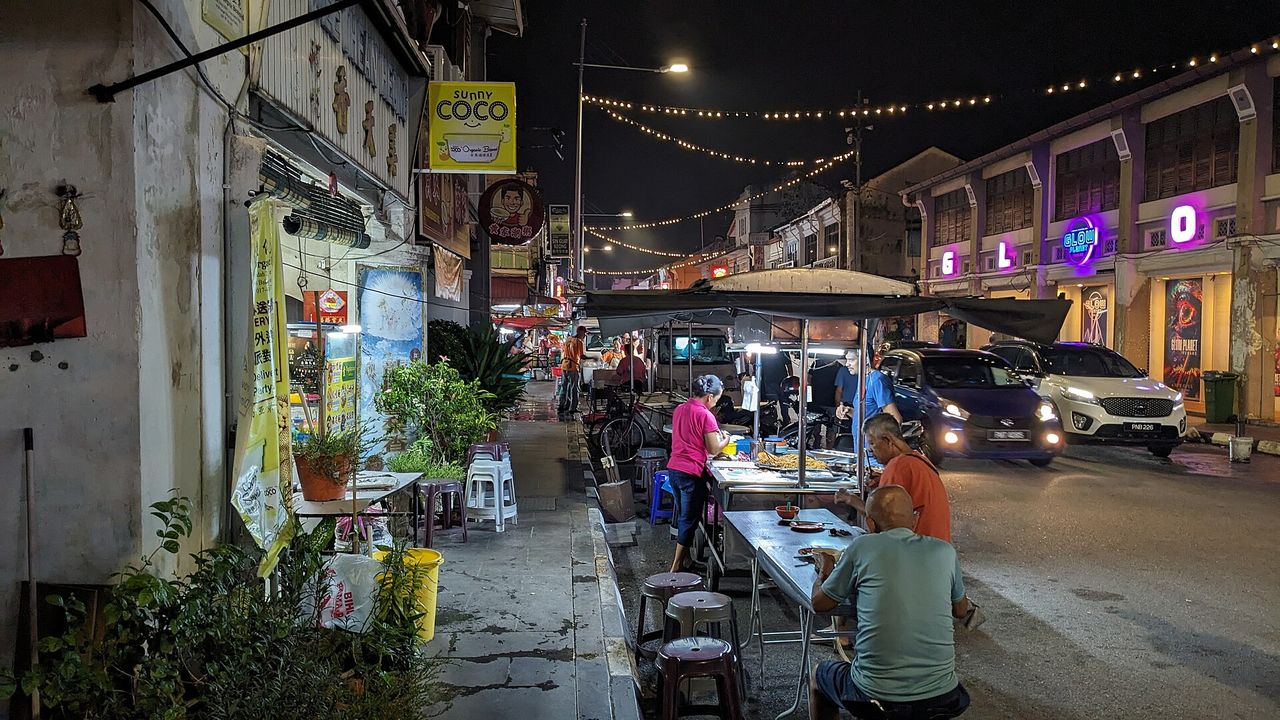
The dates change every year. According to The Star, the 2024 festival ran from 3 to 11 October, and the final day in 2025 was 29 October. During the festival, temporary vegetarian stalls decorated with yellow bunting appear across the city (2017), and on Madras Lane in George Town, dishes and snacks for strict vegetarians were reported to be available around the clock (2018). On the last day, because the gods are believed to have arrived by waterway, processions go from the temples to a jetty by the sea, and in 2025 a ceremonial “Emperor Boat” carrying prayer items was reported to be set alight at sea. For a similar event in Thailand, see our article on the Phuket Vegetarian Festival.

What the eateries and stalls are like
According to The Star (2009), festival stalls in Penang offered rice and fried noodles, along with meat-style vegetarian rolls and satay, vegetarian burgers and pizza. Many of the dishes appear to be familiar favorites made in a vegetarian way. For a temple canteen in Kuala Lumpur, Free Malaysia Today (2023) describes up to about 30 dishes laid out buffet-style and eaten as mixed rice, including vegetarian char siew and fried fish. We do not recommend particular places, but these reports show how varied the formats are: canteens attached to temples, seasonal stalls, and eateries that serve meals free of charge.

Vegetarian food in a multi-faith society, and halal labels
Vegetarian food in Malaysia is not only a Chinese matter. According to The Star (2026), during the Hindu festival of Thaipusam in Penang, stalls along the procession route hand out traditional Indian vegetarian food and drinks free of charge. The same article says vegetarian meals are served at the Sri Mahamariamman Temple in George Town during Navarathiri, a nine-day festival held between October and November. Because the religious background differs from Chinese vegetarianism, the rules are not necessarily the same.
Halal certification for Muslim consumers is a separate system from a vegetarian label. According to Free Malaysia Today (September 2024), halal certification for eateries is handled by JAKIM or state religious authorities and is currently voluntary. The paper also reported that a proposal to make it mandatory for eateries that serve neither pork nor alcohol was rejected by the Cabinet. It further reported that the Young Buddhist Association of Malaysia proposed that such eateries should be free to choose whether to apply. In short, a vegetarian eatery is not necessarily halal-certified, and a halal-certified eatery is not necessarily vegetarian. You can look up certification in the Malaysian Halal Directory introduced on JAKIM’s official site.
What travelers may want to check
Vegetarian standards differ by religion, temple and eatery. You may want to ask about the following.
- Whether the dish contains the five pungent vegetables (garlic, onion, chives and their relatives). In The Star (2025), one participant said she avoided garlic, onion, dairy and alcohol as her own preparation; the article presents this as her personal practice, not as a rule for the whole festival.
- Whether it contains eggs or dairy.
- Whether the stock, sauces or seasonings include animal-derived ingredients.
- Whether utensils and oil are shared with meat or fish cooking.
- Opening days and hours. The lunar 1st and 15th and the festival period change from year to year, so check current information.
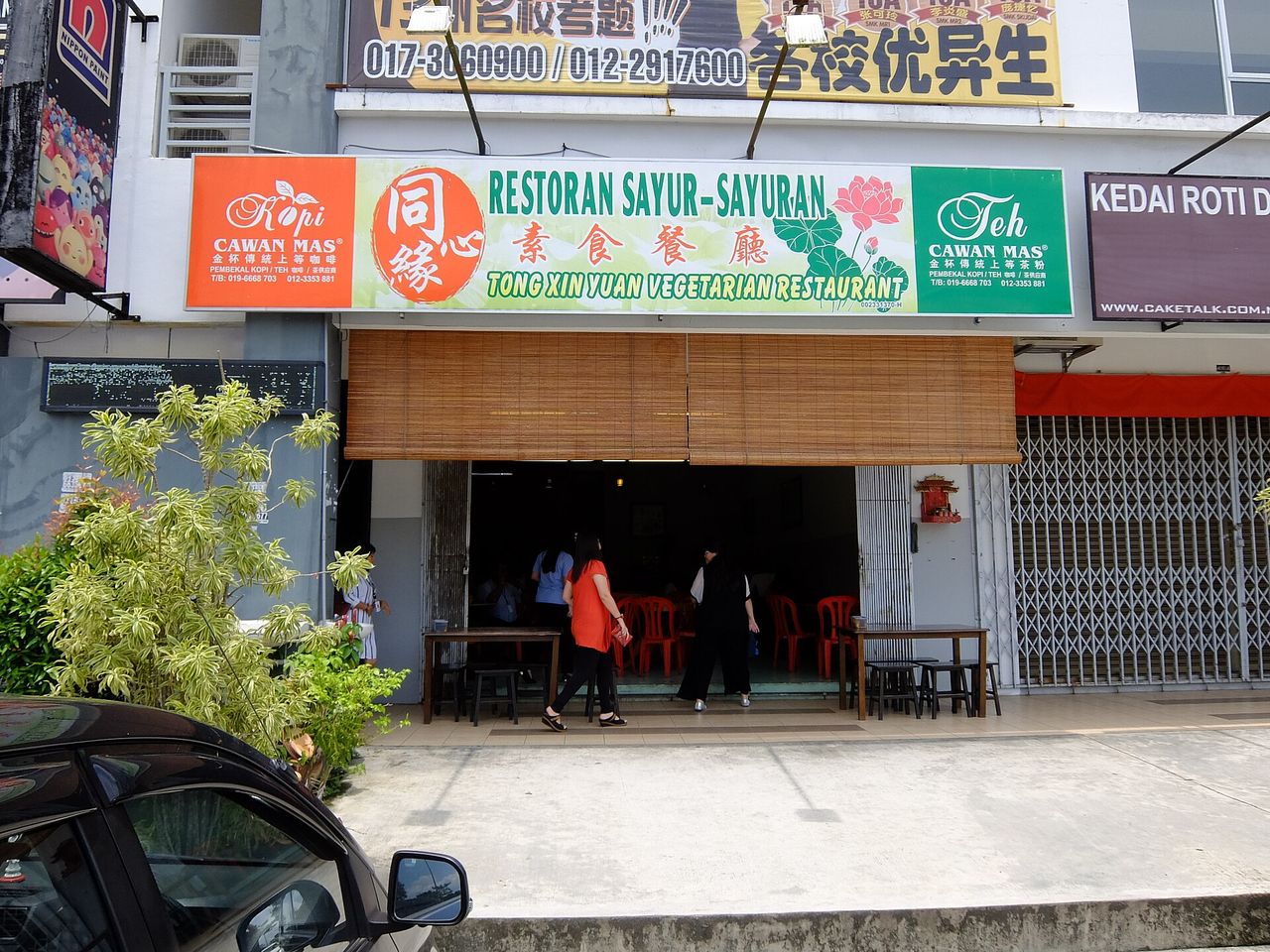
What a sign such as “素食” or “vegetarian” covers may differ from one eatery to another. Religious vegetarian food is also not the same thing as veganism; see Shojin vs. Vegan for the difference, and vegetarian food in Singapore for a neighboring example.
Cover image: A decorated float used for processions during the Nine Emperor Gods Festival in Ipoh, Malaysia. Photo: LEE 003 / CC BY 4.0 / Wikimedia Commons

Sources
- Veggie fest kicks off today (The Star, 2017)
- All-day food galore for vegetarian devotees (The Star, 2018)
- Paying homage to deities in Penang festival (The Star, 2025)
- Penang fest traders urged to protect nature (The Star, 2024)
- Veggie diet made easy (The Star, 2009)
- Helping hand for JB’s homeless, poor (The Star, 2025)
- Tasty, affordable veggie fare at a temple near KLCC (Free Malaysia Today, 2023)
- Thaipusam in Penang: A cultural and spiritual experience (The Star, 2026)
- Halal certification: what does it entail? (Free Malaysia Today, 2024)
- Allow restaurants to choose on halal certs, says Buddhist association (Free Malaysia Today, 2024)
- Halal Status Check (JAKIM)