
Indonesia · Food
Tempe and Tofu in Indonesia: Everyday Soy Foods of Java
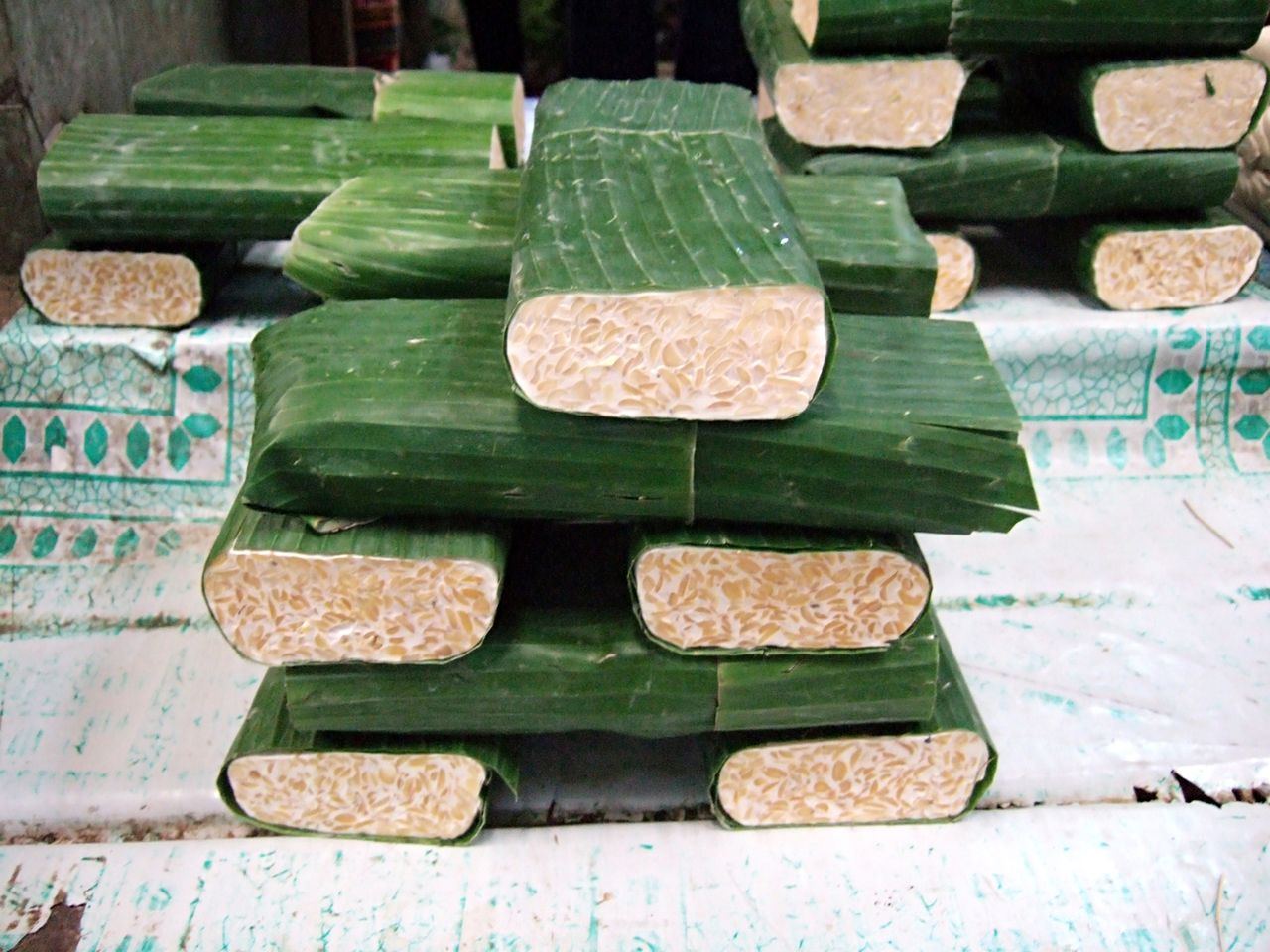
What is tempe?
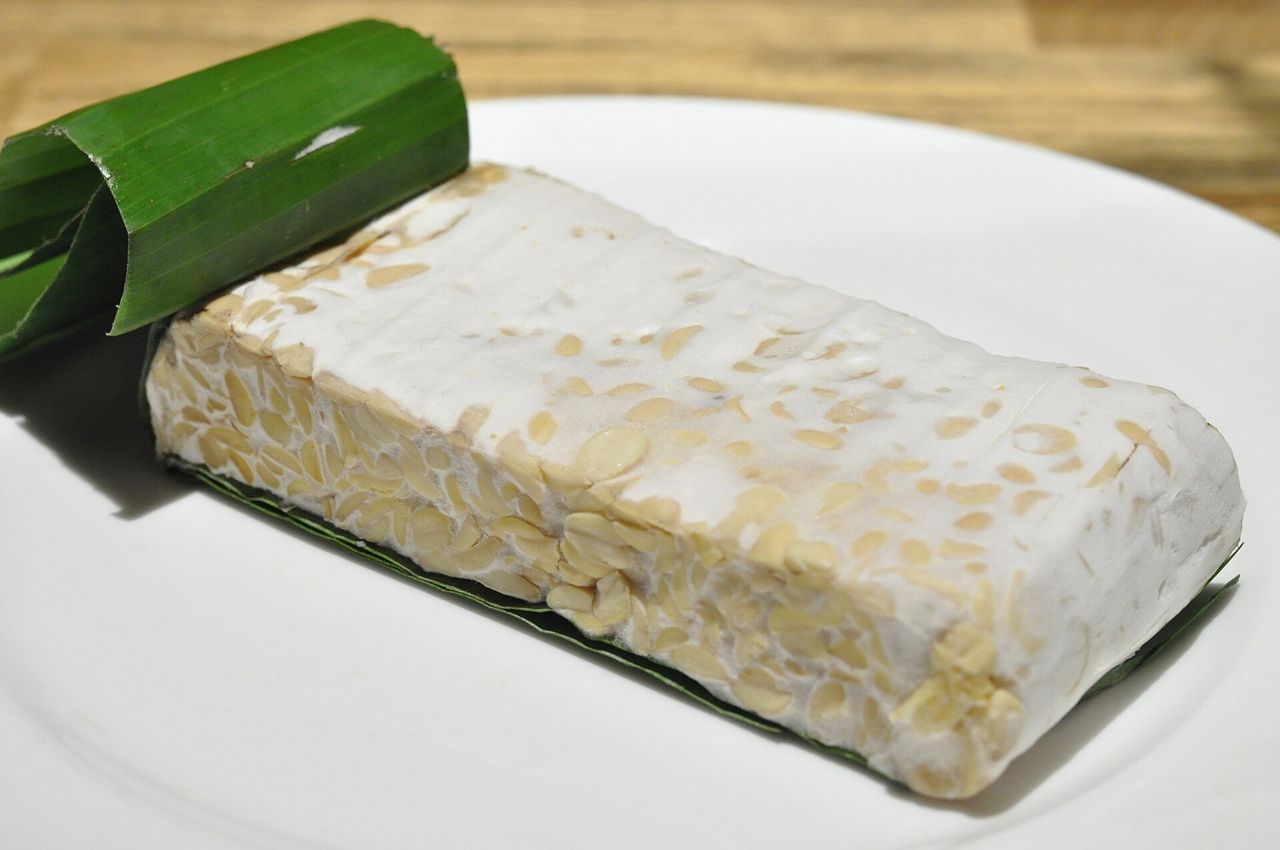
Tempe (also spelled tempeh) is made by inoculating cooked soybeans with a Rhizopus mold and letting the white mycelium bind the beans into a firm cake. In Indonesian, the word is sometimes used more broadly for similar foods made from other beans or pressed residues. Traditional methods on record involve wrapping boiled soybeans in banana leaves and adding a bit of a previous batch as the starter.

Where it is said to come from
Most accounts place its origin on Java, often in the central or eastern part. Researchers William Shurtleff and Akiko Aoyagi say it almost certainly arose before 1800 and may be a thousand years old or more. Some Indonesian scholars have guessed at over 2,000 years, but there is no firm documentation, so dates vary by source. One theory holds that Chinese soybean-koji methods reached Java and were adapted; this too remains conjecture.
The earliest known written mention of the name is thought to be the Javanese verse work Serat Centhini, believed to have been composed in the early 19th century, which lists tempe among the dishes at a banquet. The story is set in the early 17th century, but that does not prove the food was eaten then. It also appears in a Javanese-Dutch dictionary of 1875.
Because it was an everyday food of ordinary people, tempe was seen as lowly during the colonial era and for some time after independence; the first president, Sukarno, is recorded as telling people not to be a “tempe nation.” That view is said to have begun changing in the mid-1960s. In March 2025, Indonesia’s Ministry of Culture nominated tempe to UNESCO’s Representative List of the Intangible Cultural Heritage of Humanity. UNESCO’s site lists it in the 2026 cycle and shows it as “not inscribed”; we could not confirm an inscription at the time of writing.
Tofu (tahu) and how tempe is eaten
Tofu is called tahu in Indonesian and is said to have been brought by Chinese immigrants. According to The Jakarta Post, Kediri in East Java is nicknamed the “tofu city,” its Chinese-run tofu making dates to the early 1900s, and it is known for a yellow-colored tofu called tahu takwa. A 2009 Jakarta Post article also cited an industry group estimate that about half of Indonesia’s soybeans go to tempe and about 40% to tofu.
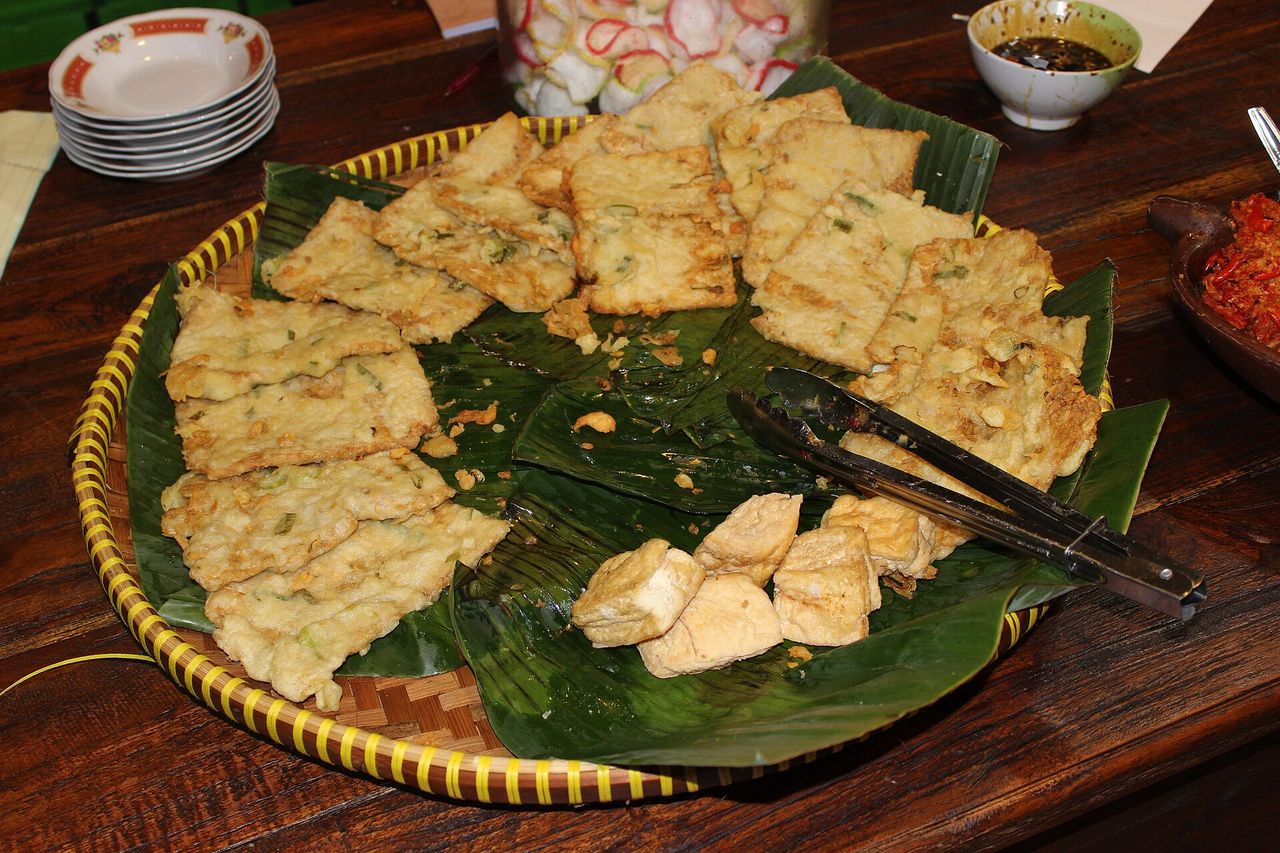
The ways of eating it are varied. A late-1970s survey in Java named as well-known dishes tempe goreng (seasoned, fried tempe), keripik tempe (thin fried chips), sayur lodeh (vegetables simmered in coconut milk, with tempe), and sambal goreng tempe (a spicy stir-braise with coconut milk). Other reported ways include serving it with sambal (a chili condiment) and simmering it in coconut milk or soy sauce.

What travelers may want to know
Tempe itself is made from soybeans and mold, but dishes are another matter. Indonesia’s tourism ministry describes nasi tempong, a specialty of Banyuwangi in East Java, as rice served with tempe, tofu, vegetables, fried chicken and salted fish, with a signature sambal made with shrimp paste (terasi). In other words, a tempe dish can still contain animal-derived seasonings or sides.
One travel guide advises watching for egg, oyster sauce and shrimp paste, and suggests saying “tanpa daging, tanpa ikan, tanpa udang” (no meat, no fish, no shrimp). This is no guarantee, so it is safest to check each time you order.
On religion, registry-based figures for the end of 2021 put Muslims at about 87% and Hindus at about 1.7% of the population. Halal standards mainly concern pork and alcohol, and some halal dishes include egg or dairy, so halal does not necessarily mean vegan. For how these ideas differ, see Shojin vs. vegan; for tofu in Japanese temple cooking, see Tofu, yuba and fu in shojin cuisine.
Cover image: Fresh tempeh wrapped in leaves at a market in Jakarta, Indonesia. Photo: Sakurai Midori / CC BY-SA 3.0 / Wikimedia Commons

Sources
- Shurtleff & Aoyagi, History of Tempeh (Soyinfo Center, 2007; PDF hosted by Gadjah Mada University)
- UNESCO Intangible Cultural Heritage: Nomination – Culture of Tempe (Indonesia)
- ANTARA Jatim: Indonesia ajukan tempe, jaranan dan teater Mak Yong ke UNESCO (30 Mar 2025)
- The Jakarta Post: Making the most of a national treat (27 Jul 2009)
- The Jakarta Post: Kediri’s Bah Kacung – tofu tradition matters (21 Feb 2017)
- Indonesia Travel (Ministry of Tourism): Getting to Know Nasi Tempong
- 4stogo: Vegan & Vegetarian Options in Indonesia (travel guide)
- Katadata Databoks: As of December 31, 2021, 86.93% of Indonesia’s population is Muslim