
Cambodia · Culture
Pchum Ben: Cambodia’s Ancestor Festival and Food Offerings at the Temple
What is Pchum Ben?
Pchum Ben is a major festival in which Cambodian Buddhists remember their deceased family members and ancestors. Hello Angkor explains the name as roughly ‘gathering’ (pchum) of ‘rice balls’ (ben). At its heart is the idea that food given to monks at the temple generates merit, and that this merit can be directed toward the ancestors.
According to IntoCambodia.org, the festival runs for 15 days, from the first to the fifteenth day of the waning moon in the Khmer month of Photrobot. Days 1 to 14 are called Kan Ben, a period when people make merit at the temple, keep precepts, clean the grounds and serve the monks. The fifteenth day, called Bon Pchum, is the main day: families gather, often in their home villages, and food is offered in the morning to monks and to ancestral shrines. The ancestors honored are described as up to seven generations of deceased relatives.
The same site notes that inscriptions show a similar observance under names such as Srath and Saratakal, one of them linked to Yasovarman I (889-910 CE). The festival is thus described as a blend of a Buddhist framework with older customs.

When it takes place
Pchum Ben follows the Khmer lunar calendar, so its Gregorian date shifts from year to year. Hello Angkor says it falls around September or October, and gives no date for any specific year.
As far as could be confirmed, the Cambodian government set the Royal Pchum Ben Festival as a three-day public holiday on October 10 to 12 in 2026 (Sub-Decree No. 167 of September 18, 2025, as summarized by Andersen Cambodia). That is the holiday; the observances at temples span the full 15 days. If you are planning a trip around it, check the official holiday announcement for the year and the guidance of the temple you plan to visit.
Rice at the center of the offerings
Food plays a central role in the festival.
- Putting rice in the monk’s bowl: a 2015 Cambodia Daily report from a pagoda near Phnom Penh describes worshippers spooning cooked rice into a row of silver bowls on a table and leaving a small donation on a plate behind each one. An elderly man helping at the ceremony called the practice dak bat, ‘putting rice in the monk’s bowl’. One worshipper said the merit reaches the dead so they can finish their suffering quickly.
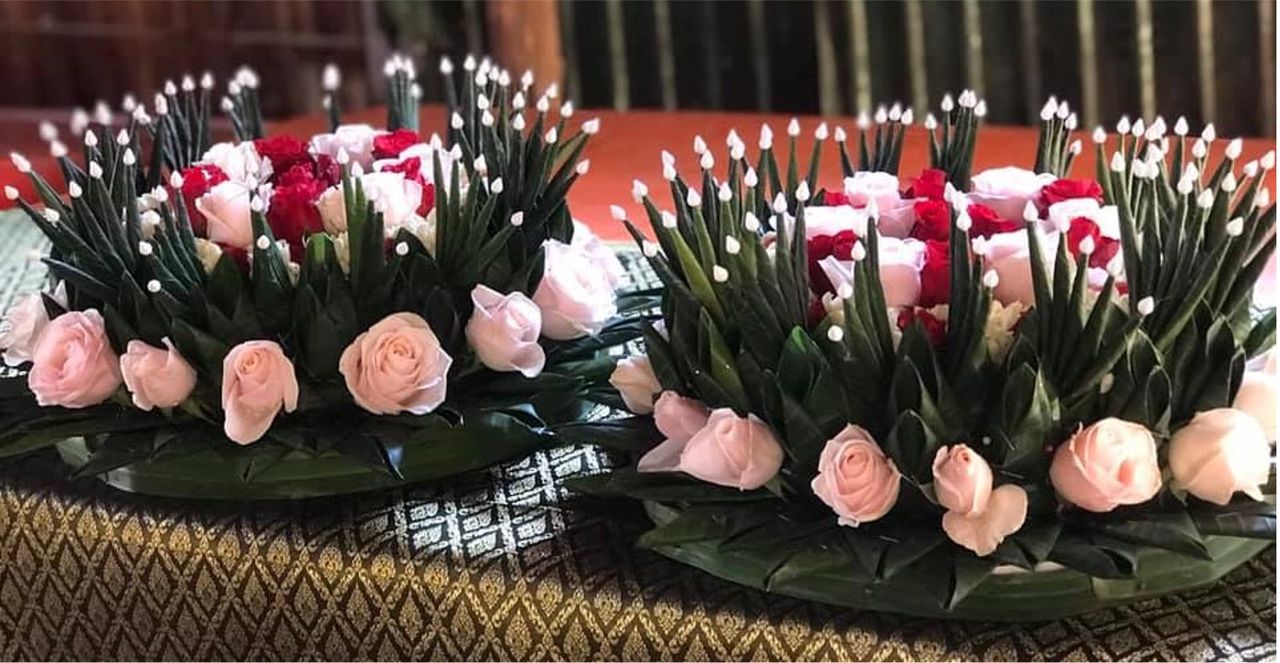
- Rice balls and sweets: IntoCambodia.org lists offerings including rice dishes, cone-shaped arrangements of fruit or cakes, sticky-rice sweets, sesame, coconut and fruit. Hello Angkor adds that sticky-rice cakes are offered during Kan Ben.
- Scattering rice balls: the Cambodia Daily reports that during the first 14 days, rice balls are thrown on the ground outside the main temple before dawn to feed hungry spirits.
Asked why rice is so central, a monk quoted in the same article said it is because Cambodians eat rice meals three times a day.
Giving to monks and the Buddhist reasoning
Hello Angkor notes that the festival coincides with Vassa, the three-month rains retreat when monks stay in their pagodas. Because monks rarely go out during this time, lay people bring food to the temple, which makes this an important time for giving.
In the Cambodia Daily article, Erik Davis, a scholar of Cambodian Buddhism, explains that the monastic code (Vinaya) forbids monks from plowing, so lay people produce the food and the monks’ acceptance of it turns the gift into merit. IntoCambodia.org advises bringing food to the temple by about 11 a.m., since monks do not eat after noon.
Hello Angkor describes two ways of understanding the offering to ancestors. In the ‘canonical’ view, food is given to living monks and the resulting merit is transferred to the dead. In the ‘popular’ view, food is offered directly to the dead, as in tossing rice balls or scattering rice in fields. Accounts of the spirit world and how merit travels differ by region and by person.
Cambodian food is not necessarily vegetarian
It is worth avoiding a common misunderstanding. Giving food to monks, or offering food at a Buddhist festival, does not mean the food is vegetarian.
- Everyday food: Wikipedia’s Cambodian cuisine entry calls rice and freshwater fish the two main pillars of the Cambodian diet. Fish is grilled, fried, dried, or fermented into prahok (fermented fish paste) and fish sauce, and prahok is said to flavor almost every Khmer dish. Meat consumption (beef, pork, poultry) is said to have risen markedly since the 1980s; in rural areas meat is used sparingly, and vegetarian curries are described as less common.
- Monks’ food: the Jivaka Sutta, a Theravada scripture, teaches that meat may be eaten unless one has seen, heard or suspected that the animal was killed for the monks. Theravada monks generally accept what is placed in their bowls, and vegetarianism is not described as a requirement (Buddhist vegetarianism, a supporting source). However, no source found for this article shows what is actually served at particular Cambodian temples.
So, unlike Japan’s shojin ryori, this article’s sources do not show a developed meat-free temple cuisine in Cambodia. A fair summary is that Cambodian food is a rice-centered cuisine that uses fish and meat in daily life, and that giving food to the temple is an important part of religious life within it.
Notes for visitors
For temple visits, Hello Angkor lists basic etiquette: cover shoulders and knees, remove shoes before entering temple buildings, stay quiet, and ask permission before photographing rituals, monks or worshippers. Many people travel home during the festival and the ceremonies are solemn. If you are invited to join in, following your hosts is the safest course.
Travelers who avoid meat or fish should ask specifically, on the spot, whether offerings, temple meals and ordinary dishes contain meat, fish or fermented fish such as prahok. A dish being called a vegetable dish does not guarantee that no fish-based seasoning is in it.
Limits of this article
- Much of the understanding of the festival (seven generations, offerings to spirits, how merit is transferred) rests on guide sites and press reports, and is said to vary by region and tradition.
- We could not confirm what monks actually eat, or how vegetarian choices work in practice, at specific Cambodian temples.
- The Cambodia Daily report cited here dates from 2015.
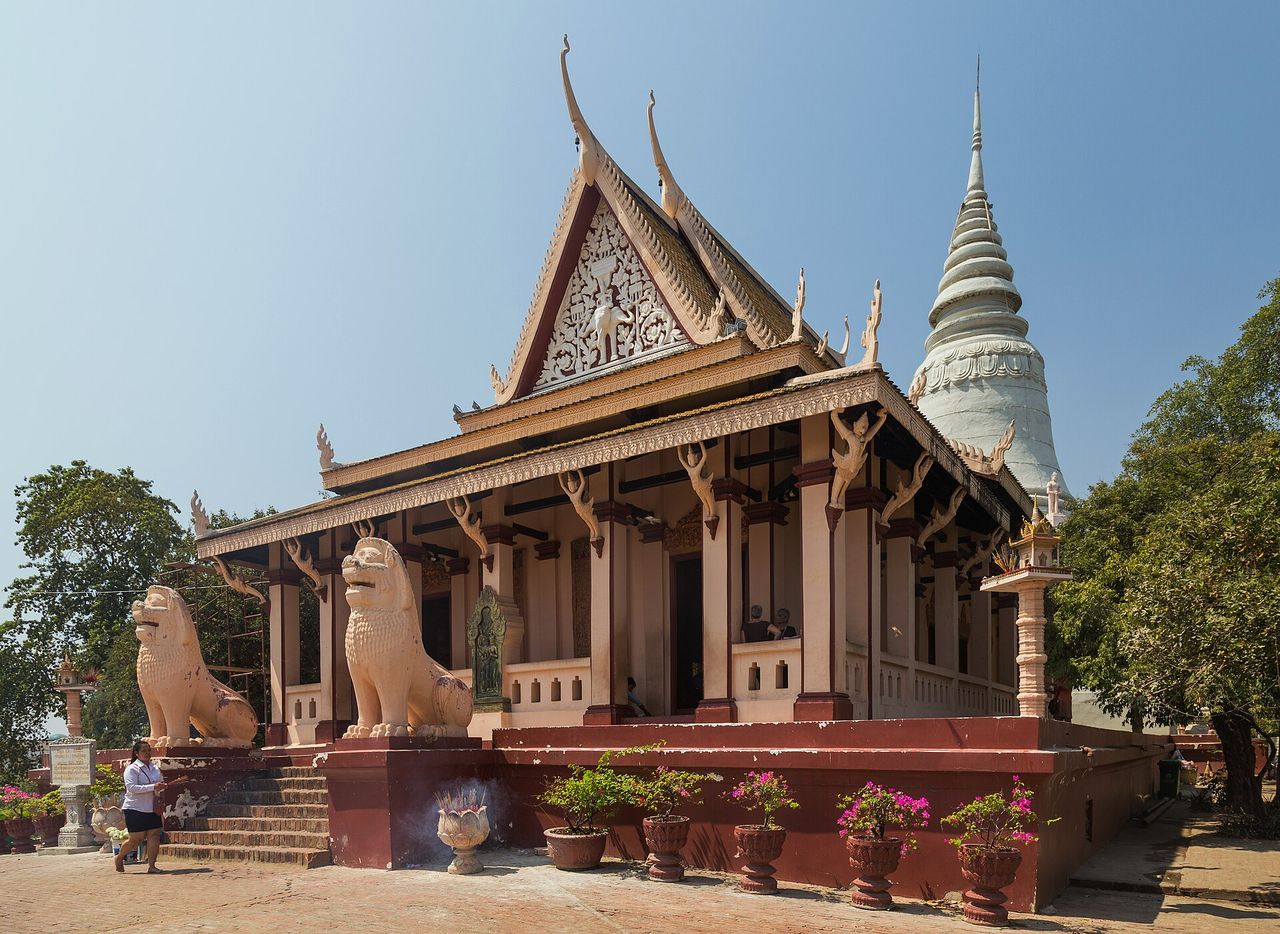
Cover image: The main temple of Wat Phnom in Phnom Penh. Photo: Marcin Konsek / CC BY-SA 4.0 / Wikimedia Commons

Sources
- Pchum Ben (Ancestor’s Day) (IntoCambodia.org)
- A guide to Cambodia’s Pchum Ben: Ancestors Day (Hello Angkor)
- The Cycle of Rice: Rice for the Spirits (The Cambodia Daily, 2015)
- Cambodia Sets Official 2026 Public Holiday Schedule (Andersen Cambodia)
- Cambodian cuisine (Wikipedia)
- Jivaka Sutta (aimwell.org)
- Buddhist vegetarianism (Wikipedia)