
Japan · Food
Gomi, Goshiki, Gohō in Shōjin Ryōri: Five Tastes, Five Colors, Five Methods
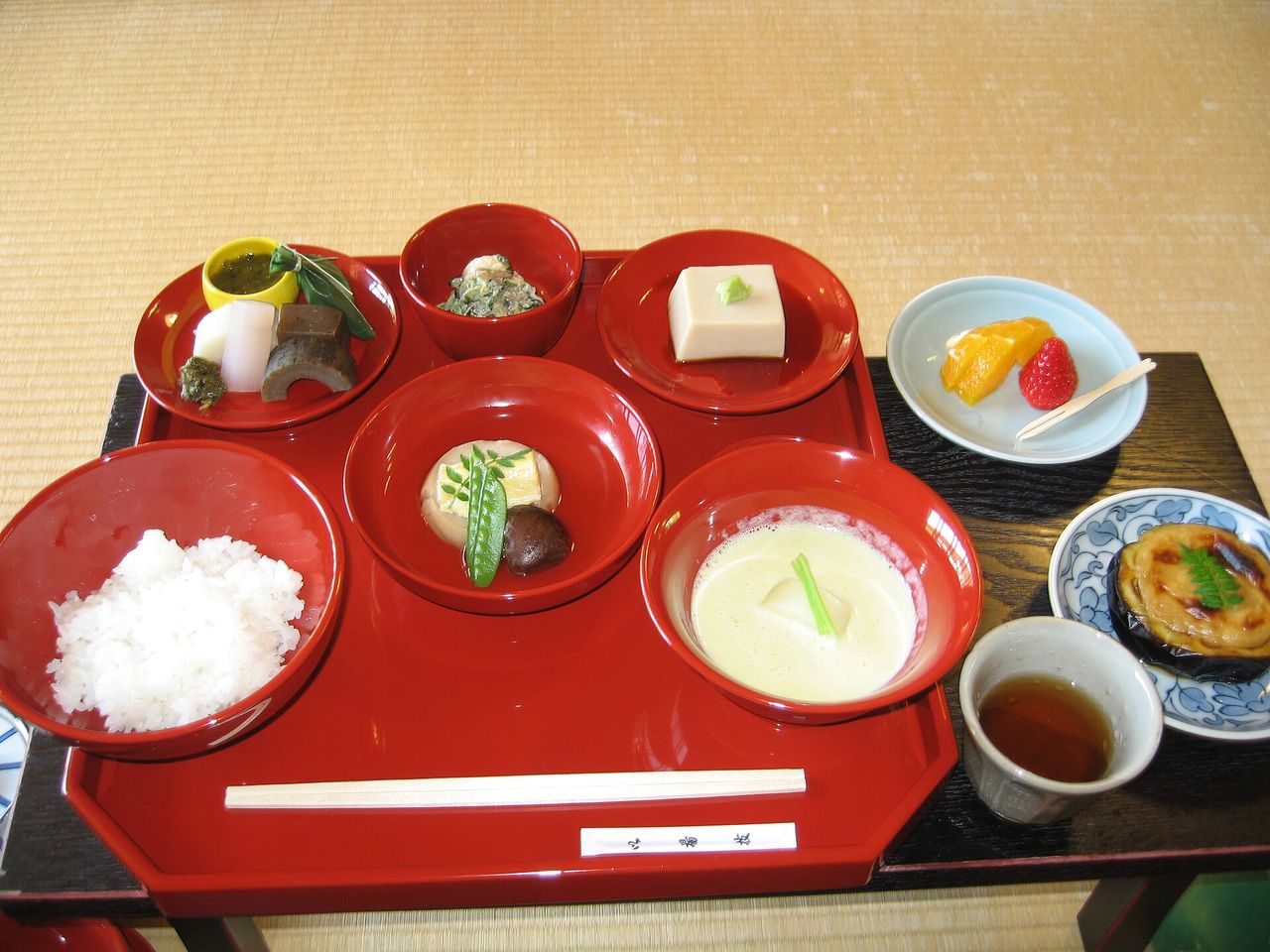
When people talk about how a shōjin ryōri (Buddhist temple cuisine) meal is put together, a set of three “fives” often comes up: gomi (five tastes), goshiki (five colors) and gohō (five methods). This article compares public explanations and the Sōtō school’s official website to see what each term means and where the sources disagree. For the basics of the cuisine itself, see What Is Shōjin Ryōri?
What the three terms refer to
Sōtōzen-net, the official site of the Sōtō Zen school, lists the five tastes as bitter, sour, sweet, spicy and salty; the five methods as raw, simmering, grilling, deep-frying and steaming; and the five colors as blue (green), yellow, red, white and black. The site describes this as an idea influenced by Chinese yin-yang and five-elements thought, and says it is recognized across Japanese cooking in general, not only in shōjin ryōri.
It also gives examples of how it is used when planning a meal: adding bitter or spicy dishes so that sweet ones do not make the meal monotonous, mixing grilled or fried dishes in with simmered ones, and thinking about how the colors of the ingredients go together.
Where the sources differ
- “Spicy” versus umami in the five tastes: Sōtōzen-net includes spicy and does not list umami. The Ministry of Agriculture, Forestry and Fisheries (MAFF) explanation of washoku lists sweet, sour, salty, bitter and umami, and the shōjin ryōri entry in the Japan Tourism Agency’s multilingual commentary database also gives sweet, sour, salty, bitter and umami, without spicy.
- “Blue” versus “green” in the five colors: MAFF writes red, yellow, blue (green), white and black, putting green in brackets after blue. The Tourism Agency database writes green, yellow, red, black and white.
- What “gohō” means: Sōtōzen-net and MAFF treat it as a list of cooking methods. MAFF adds that they correspond to sashimi, simmered dishes, grilled dishes, steamed dishes and fried dishes. The Tourism Agency database (the entry from the Nakaumi and Lake Shinji area), however, uses “gohō” for the rule of including one item of each of the five colors and five tastes.
So when you see “gohō” on its own, you have to check from the context whether it means cooking methods or the rule about colors and tastes.

Relation to Zen thought
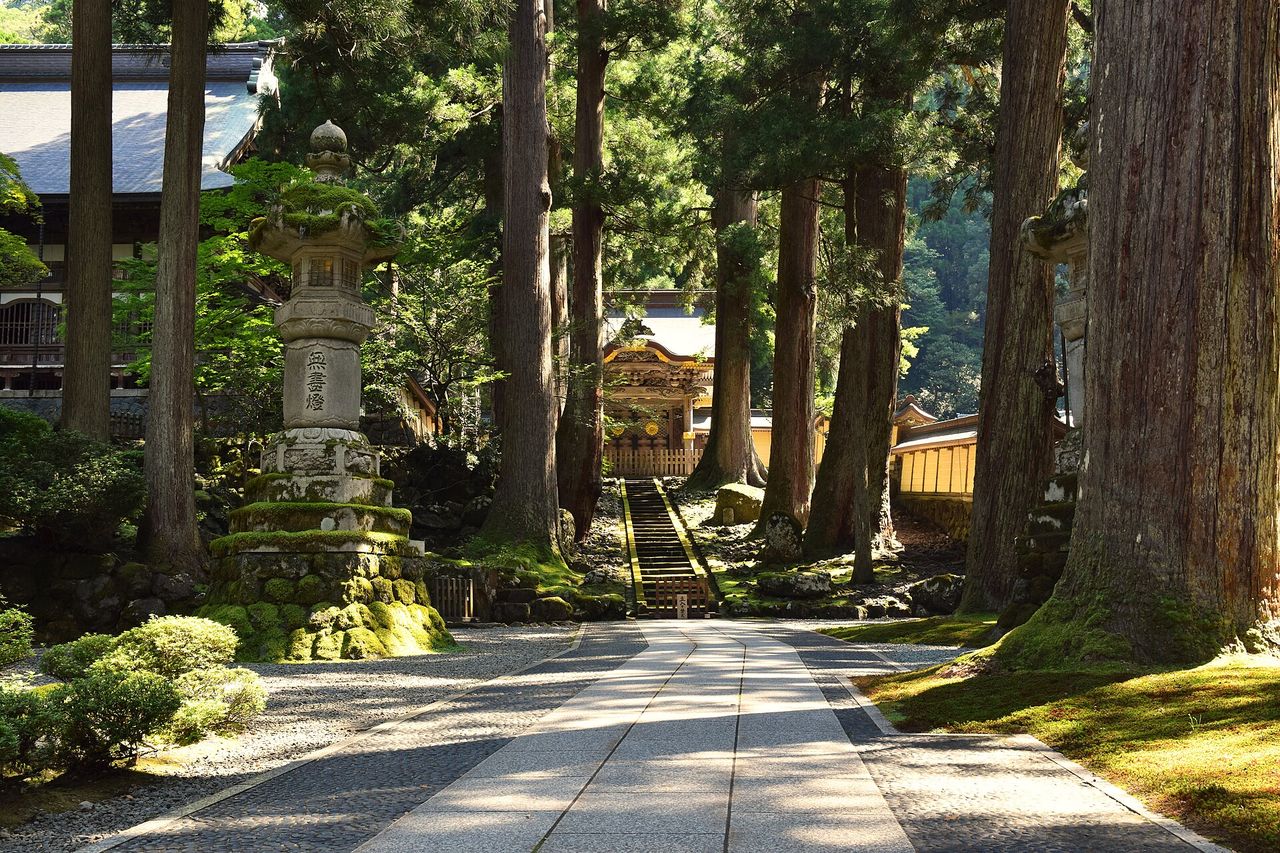
Sōtōzen-net introduces the “six tastes” (rokumi) and “three virtues” (santoku) from Dōgen’s Tenzo Kyōkun (Instructions for the Cook). The three virtues are lightness and softness, cleanliness, and preparing food according to the rules; and as the sixth taste the site stresses tanmi, the plain, natural flavor of the ingredient itself. The Tourism Agency database (the Eiheiji Town entry) also describes six tastes (bitter, sour, sweet, salty, mild and spicy) and the three virtues. However, none of the sources we checked says whether the gomi-goshiki-gohō set itself comes from Dōgen’s writings. For the text, see also Tenzo Kyōkun and the Five Contemplations.
As for the link with yin-yang and five-elements thought, we can only confirm what Sōtōzen-net says, that the idea was “influenced” by it. On the five colors, a dictionary entry on Kotobank (the Seisenban Nihon Kokugo Daijiten) explains that in ancient Chinese five-elements theory they are blue, yellow, red, white and black, and that Buddhism also calls them the five true colors and assigns them to the five faculties, the five wisdoms, the five Buddhas and so on. The Tourism Agency database (the Chichibu entry) also says the five colors of shōjin ryōri symbolize the Five Wisdom Buddhas. How these strands connect to the meal-planning idea is not explained in the sources we read.

Relation to modern washoku and presentation
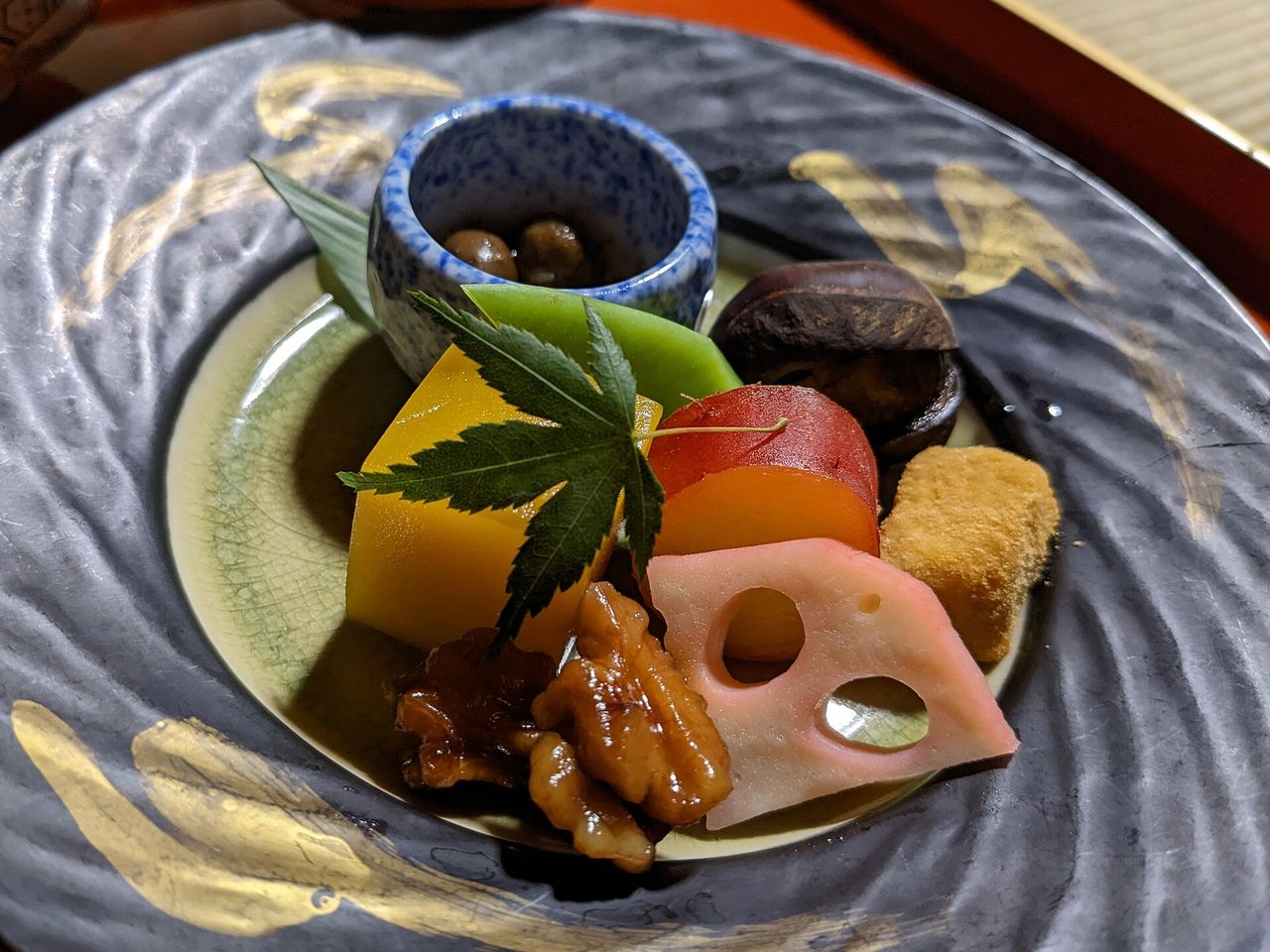
MAFF introduces the five methods, five tastes and five colors as basics of washoku. It ties the colors to presentation, including the color of the dish and garnishes such as leaves and flowers, as a way of adding visual enjoyment. This explanation does not mention shōjin ryōri, but it overlaps with Sōtōzen-net’s remark that the idea is known across Japanese cooking. For how umami is drawn out, see Shōjin Dashi.
On the other hand, these sources do not tell us how far the set is actually kept in mind in modern home or restaurant menus. In addition, according to the abstract of a paper available on J-STAGE (Tokuno Takayuki, 2016), the term “shōjin ryōri” itself has historically carried both the sense of vegetarian food and of plain, simple fare, and from the modern period it came to be described as the “source of Japanese cuisine.” For these reasons, it is safest to read gomi, goshiki and gohō not as a fixed rulebook but as one idea whose wording varies from source to source.
Cover image: A spring shojin ryori meal served in red lacquer bowls. Photo: サフィル / CC BY-SA 4.0 / Wikimedia Commons

Sources
- Sōtōzen-net, “精進料理の味とは” (The Taste of Shōjin Ryōri)
- MAFF, WASHOKU World Challenge “Learn” (learning 04)
- Japan Tourism Agency multilingual commentary database, Shōjin Ryōri overview (Nakaumi and Lake Shinji area)
- Japan Tourism Agency multilingual commentary database, Shōjin Ryōri overview (Eiheiji Town)
- Japan Tourism Agency multilingual commentary database, Shōjin Ryōri at the Chichibu temples
- Kotobank, “五色” (five colors)
- Tokuno Takayuki, “Food and Practice in the Sōtō School”, Journal of Religious Studies 90(2) (J-STAGE abstract)