
Singapore · Food
Su Shi in Singapore: Chinese Buddhist Vegetarian Traditions and Everyday Vegetarian Food
Roots of Chinese vegetarian food
In Singapore, the Chinese vegetarian diet known as su shi (素食) is understood to be tied to the non-killing ideas of Mahayana Buddhism and Taoism that came from China. According to Culturepaedia, the cultural website run by the Singapore Chinese Cultural Centre, abstaining from meat on the 1st and 15th days of the lunar month was already a common custom in China from the Zhou dynasty. It also explains that the Mahayana tradition can involve avoiding the “five pungent foods”, such as chives and garlic. For a comparison with another region, see the types of Taiwanese vegetarian food.
BiblioAsia, the National Library Board’s magazine (2022), describes ordained nuns, lay Buddhist women and vegetarian women called zhaigu as the people who carried this food culture in Singapore. Culturepaedia adds that zhaigu lived together in communal “vegetarian halls” (zhaitang), giving up meat and alcohol.
From temples to eating houses and hawker stalls
According to Culturepaedia, in the early 20th century several of these halls began selling rice, noodles and vegetarian mooncakes to the public to fund their activities. Mock meats made from wheat gluten are also said to have developed in the festival cooking of temples.
BiblioAsia says Chinese vegetarian restaurants appeared in the 1940s and many were founded by Buddhist women. One opened in 1946 and ran until 2010. Another, founded in 1953, aimed at price-conscious diners and was reportedly packed on the 1st and 15th of the lunar month and on major Chinese festivals; it closed in 2017. Culturepaedia also notes that one organisation began serving free vegetarian meals in the late 1970s, and that a temple has offered free vegetarian meals on Vesak Day since 1998.
On the spread to hawker centres, Culturepaedia cites a 1988 Straits Times report that put the number of Chinese vegetarian hawker stalls at around 160 at the time. This is an estimate, not an official count. BiblioAsia says that today most hawker centres and food courts have at least one vegetarian stall.

Economy bee hoon and everyday vegetarian food
“Economic” or “economy” bee hoon is a familiar part of Singapore’s breakfast and lunch scene. According to food media such as Eatbook, it usually starts with a base of fried rice vermicelli, to which diners add the dishes they like, and low prices are a big part of the appeal. In vegetarian versions, stir-fried cabbage and beans are described alongside mock meats such as mock char siew.
Wikipedia, citing BiblioAsia, says vegetarian bee hoon is “said to” have originated in restaurants run by Chinese Buddhist women. I could not find a source that settles its origin, so it is best read as a commonly told account. Note also that religious su shi differs in some ways from modern veganism, for example in its treatment of eggs, dairy and the five pungent foods. See Shojin ryori vs. vegan for more on that distinction. The custom of eating vegetarian on the 1st and 15th also has a counterpart in Vietnam: vegetarian days on the 1st and 15th of the lunar month in Vietnam.

Vegetarian food in a multi-ethnic society
Vegetarian food in Singapore is not only a Chinese matter. According to Roots.gov.sg, run by the National Heritage Board, vegetarian cooking features strongly in Indian food heritage, and vegetarian dishes are part of celebrations such as Pongal and weddings. It also notes that many Indian vegetarians avoid eggs, so desserts rely on milk, ghee and sugar. BiblioAsia reports that Ananda Bhavan, an Indian vegetarian restaurant that opened in 1924, is believed to be one of Singapore’s oldest vegetarian restaurants.
People of different faiths have also shared vegetarian eating places. Culturepaedia, citing a 1980 newspaper article, says the budget-friendly restaurant mentioned above drew Christians who avoided meat on Fridays and Hindus seeking vegetarian food after temple worship, as well as Buddhists. Roots.gov.sg lists eating vegetarian meals among common Vesak Day practices, and Culturepaedia says devotees of the Nine Emperor Gods Festival eat vegetarian for at least 10 days. For a vegetarian festival elsewhere, see the Phuket Vegetarian Festival.
I could not find a verifiable source on an official meat-free initiative by public bodies, so it is not covered here.
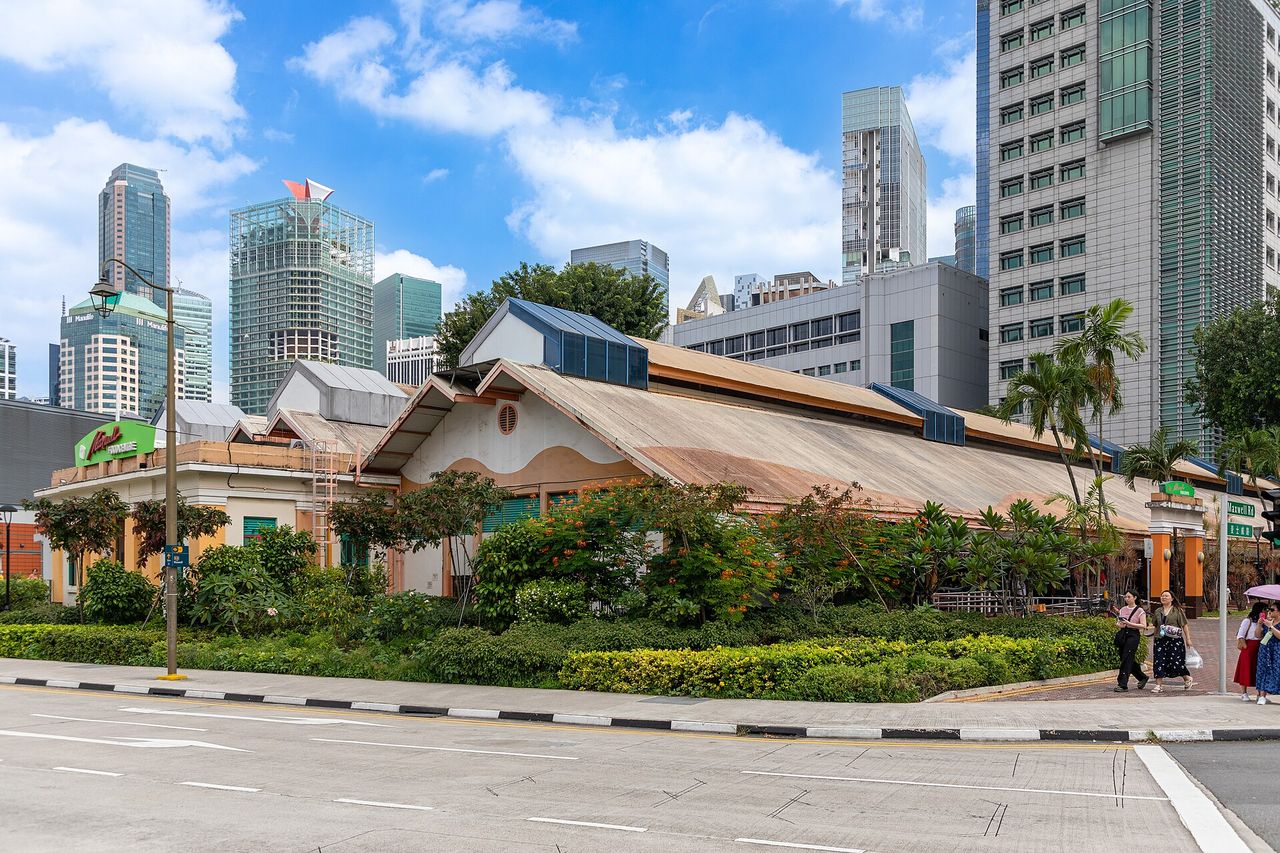
Cover image: Exterior of Maxwell Food Centre, a hawker centre in Singapore. Photo: Aaaatu / CC BY-SA 4.0 / Wikimedia Commons

Sources
- From temples to shopping malls: A century of Chinese vegetarian food in Singapore (Culturepaedia / Singapore Chinese Cultural Centre)
- How Chinese Buddhist Women Shaped the Food Landscape in Singapore (BiblioAsia / NLB)
- Indian Cuisine in Singapore (Roots.gov.sg / National Heritage Board)
- Vesak Day (Roots.gov.sg / National Heritage Board)
- 14 Affordable Economic Bee Hoon Stalls In Singapore (Eatbook.sg)
- Vegetarian bee hoon (Wikipedia)